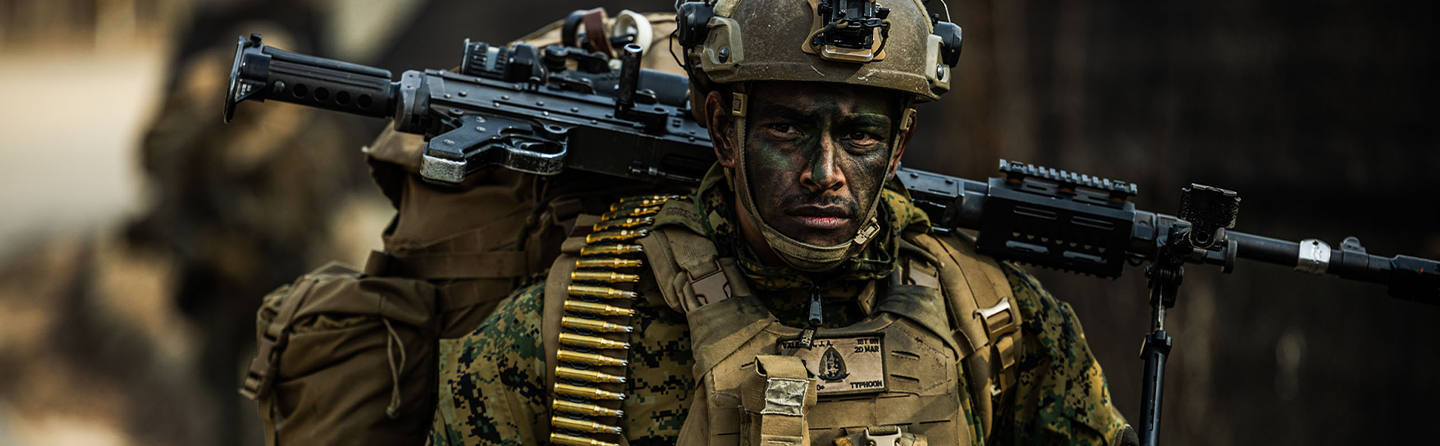
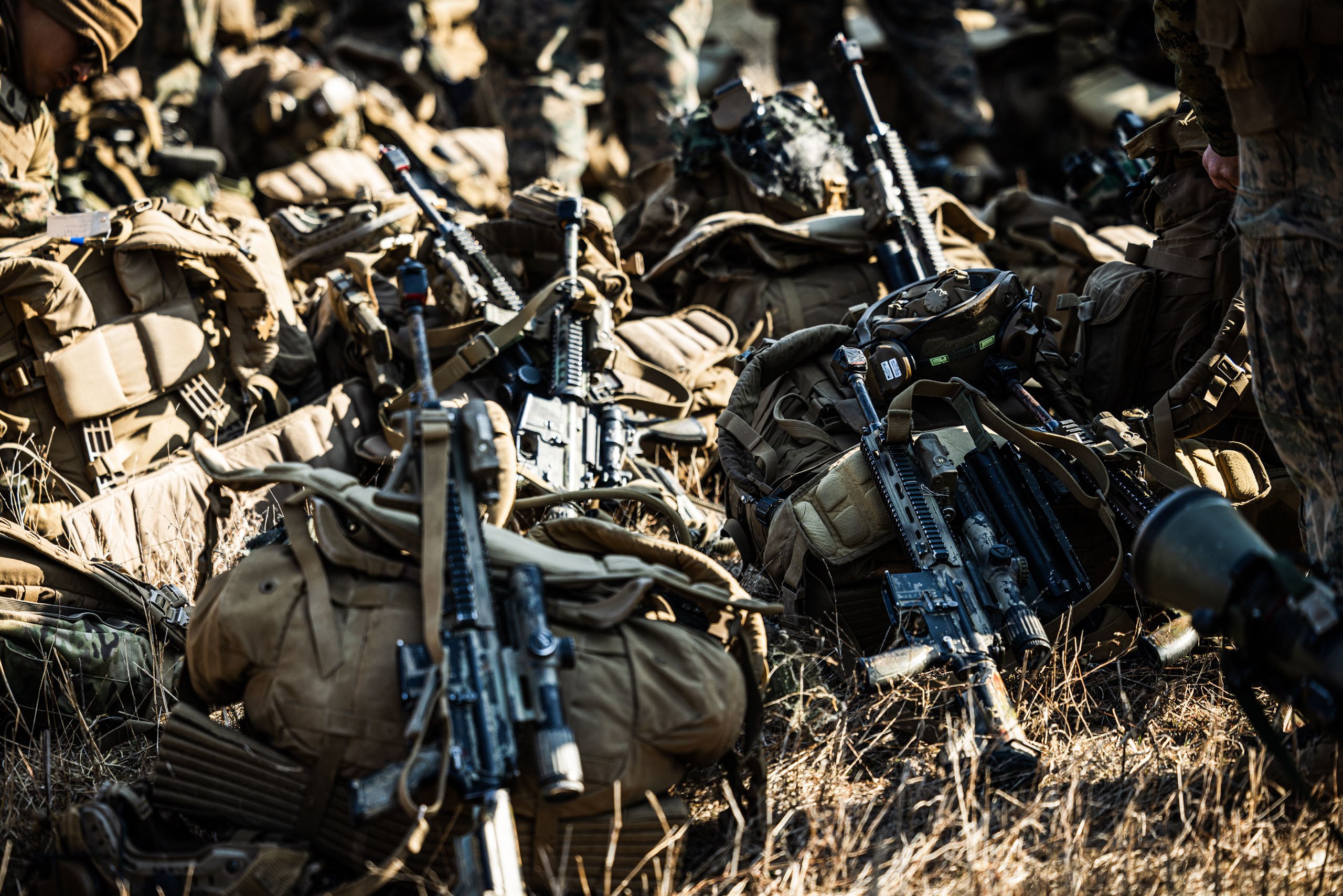
Marine machine gunner carries M240 with ammunition belt during force-on-force training exercise in South Korea.

Equipment and Weapons

Marines are armed with more than determination—they’re equipped with advanced weapons, vehicles, and gear.

In line with the Corps’ expeditionary nature, every tool Marines use is designed to help in rapid deployment and mission success. Marines and their gear are ready to win any fight, anywhere.

Lethal Skill. Unmatched Firepower.

Trained on a wide array of weaponry

Each Marine assigned to a particular weapon undergoes extensive, specialized training to ensure precision and effectiveness in any combat situation.

Watch the video to see Marine firepower in action, then explore the weapons that help Marines dominate the fight.

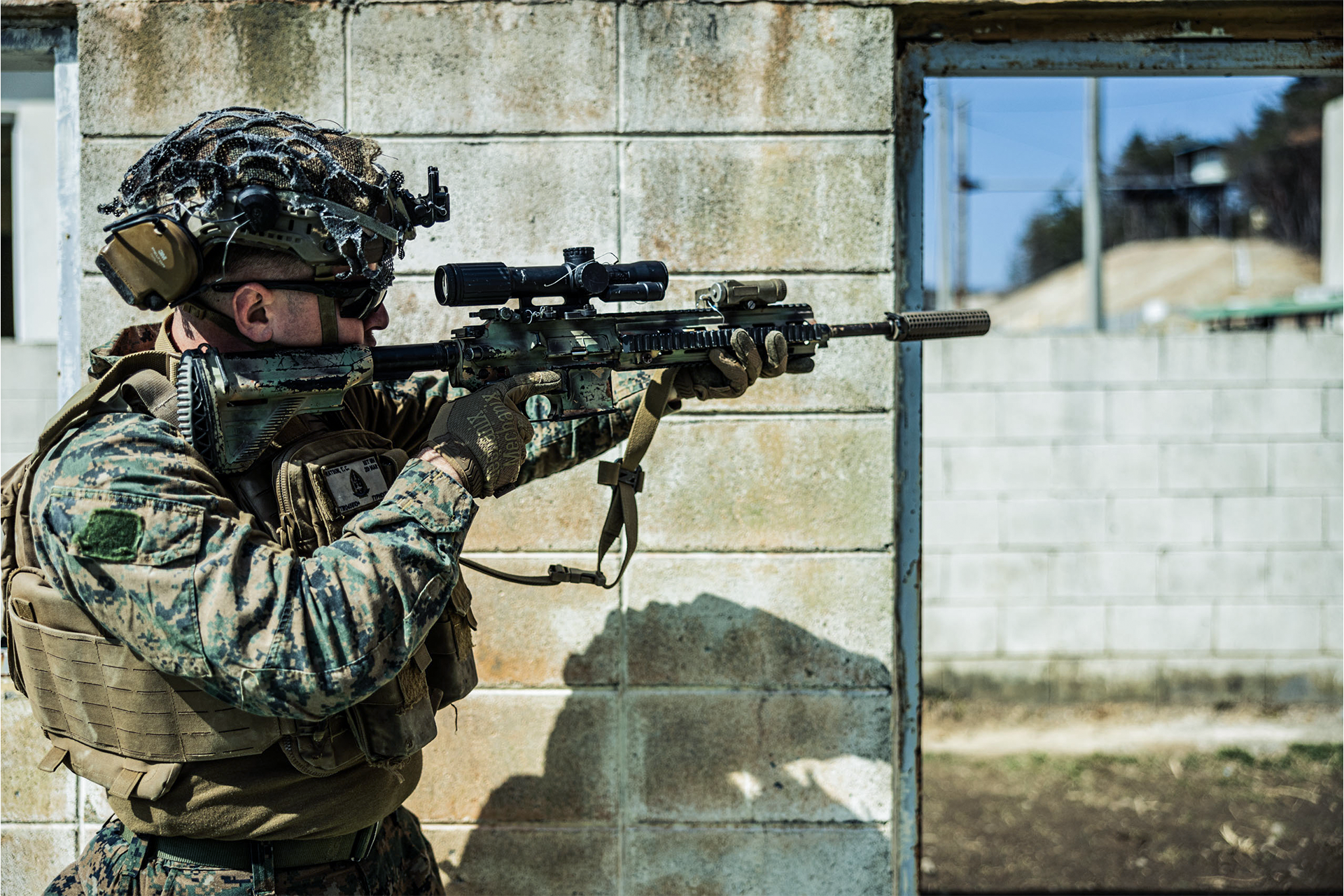
Marine aims M4 carbine with scope and suppressor through window during urban warfare training in South Korea.

Every Marine a Rifleman

No matter their role, every Marine is first trained as a rifleman—skilled in marksmanship, combat tactics, and the fundamentals of warfare. From the primary service rifle and the M27 Infantry Automatic Rifle to the trusted KA-BAR combat knife and M18 pistol, Marines are prepared to engage the enemy with precision and confidence. This foundation of combat readiness ensures that every Marine can fight and win—anywhere, under any conditions.

Marine aims M4 carbine with scope and suppressor through window during urban warfare training in South Korea.

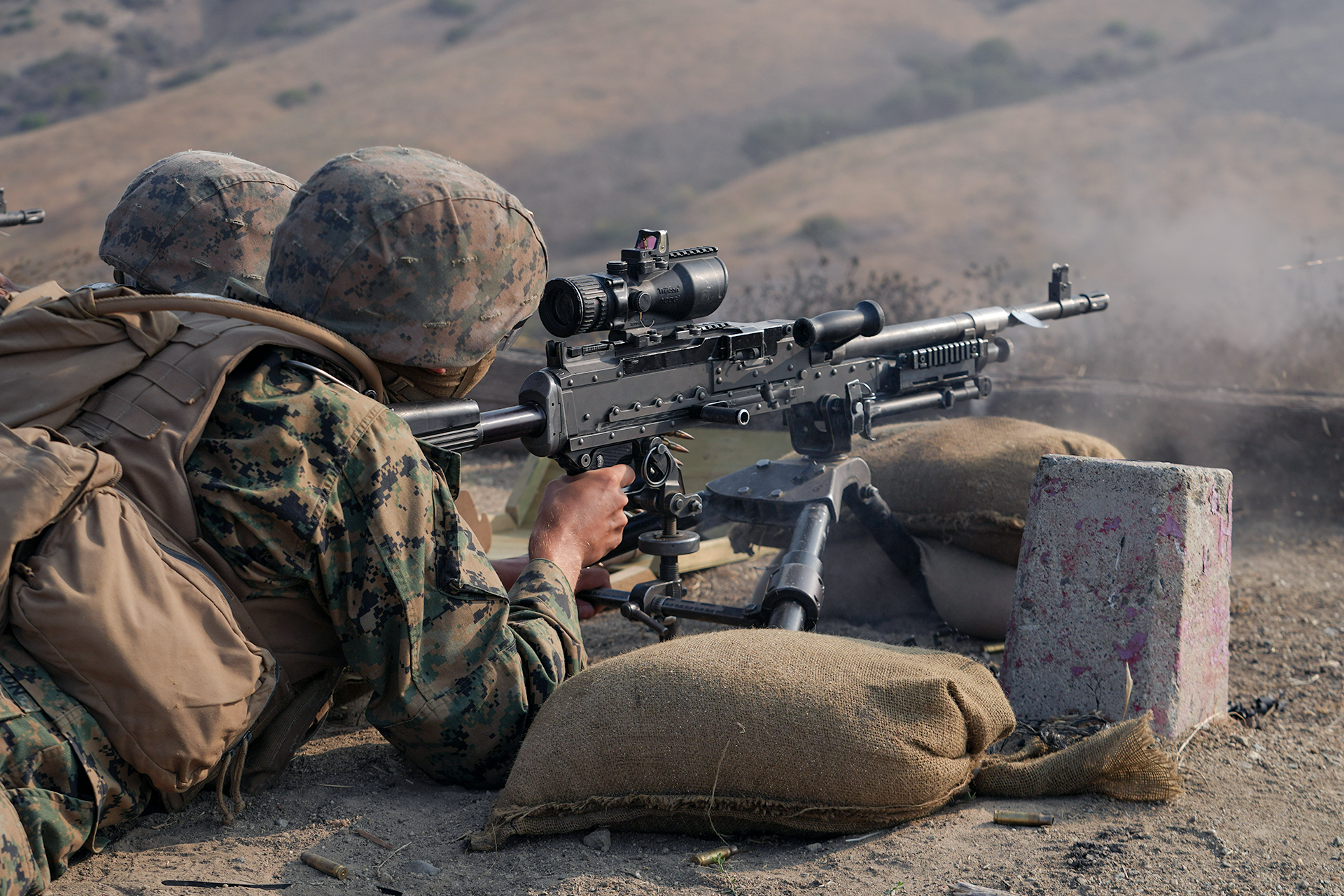
Marines operate M240 medium machine gun with optic mounted on tripod during live fire training at Camp Pendleton.

Bringing Power to the Fight

When precision needs backup and the fight intensifies, Marines rely on crew-served weapons like the M240B machine gun and the MK19 automatic grenade launcher. The M240B can unleash 650 to 900 rounds per minute, delivering sustained firepower to suppress enemy positions. The MK19 launches explosive grenades with devastating impact. Operated by teams of Marines, these weapons provide overwhelming cover fire—allowing units to maneuver, gain ground, and complete the mission.

Marines operate M240 medium machine gun with optic mounted on tripod during live fire training at Camp Pendleton.

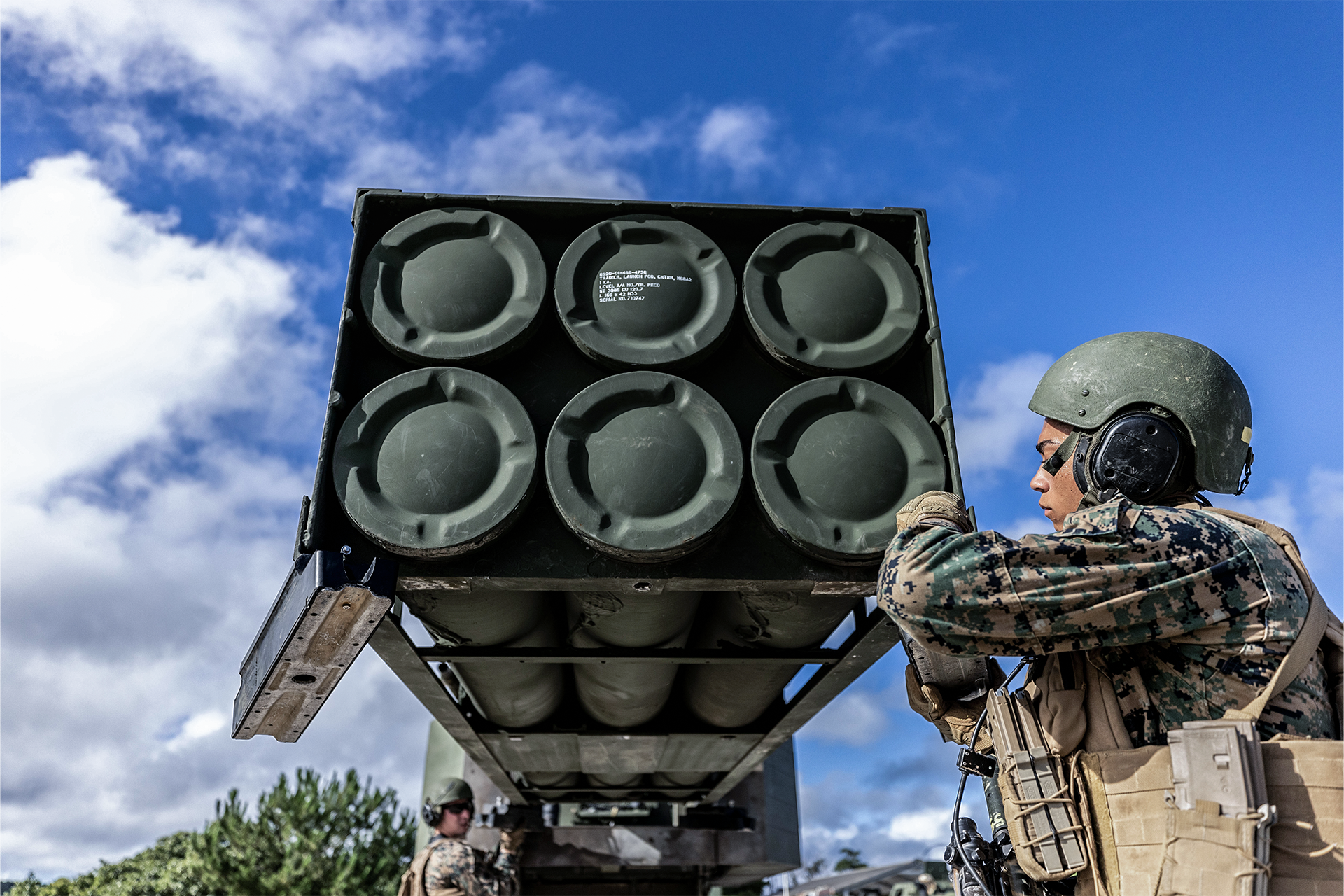
Marine inspects HIMARS rocket artillery system launcher pod with six missile tubes under clear blue sky.

Mobile Missile Systems that Strike Fast

To dominate from a distance, Marines use advanced systems like the High Mobility Artillery Rocket System (HIMARS) and the Navy/Marine Expeditionary Ship Interdiction System (NMESIS). These mobile platforms deliver precision rocket and missile strikes against high-value targets—like enemy ships or fortified positions—while keeping Marines on the move. Mounted on tactical vehicles, they can fire, relocate, and stay ahead of the threat. It’s long-range lethality with expeditionary speed.

Marine inspects HIMARS rocket artillery system launcher pod with six missile tubes under clear blue sky.

Vehicles Built for Every Battlespace

The Marine Corps is unlike any other force. That’s why Marine vehicles are built for unmatched versatility, from armored ground transports to amphibious combat vehicles that move seamlessly from sea to shore.

Watch the video to see these vehicles in action.

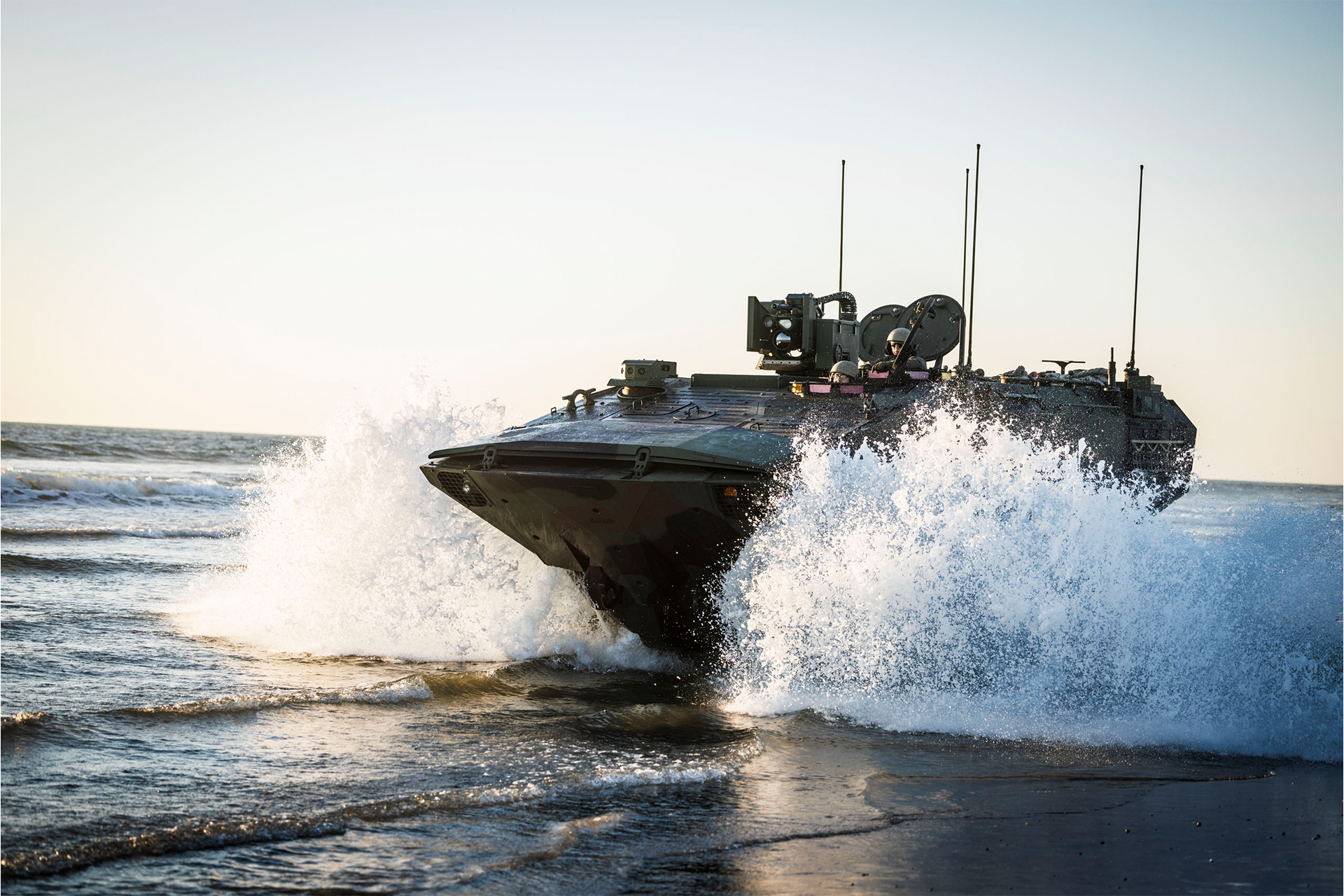
Amphibious Combat Vehicle drives through surf with turret and antennas during water operations at Camp Pendleton.

Infantry on the Move. Firepower on Demand.

Marine Infantry Fighting Vehicles are built to deliver Marines into the fight—and stay in it.

Platforms like the Amphibious Combat Vehicle (ACV) are designed for ship-to-shore operations, carrying up to 13 Marines plus crew from the ships of a Marine Expeditionary Unit (MEU) directly onto land. Once ashore, they continue to push forward, providing transport and direct-fire support in combat zones.

The Light Armored Vehicle (LAV) is a highly mobile, all-terrain vehicle used by the Marine Corps for reconnaissance and security missions. Equipped with a powerful 25mm cannon and capable of speeds up to 60 mph, the LAV gives Marines the speed, firepower, and versatility needed to operate effectively on the modern battlefield.

These vehicles don’t just move Marines—they fight alongside them.

Amphibious Combat Vehicle drives through surf with turret and antennas during water operations at Camp Pendleton.

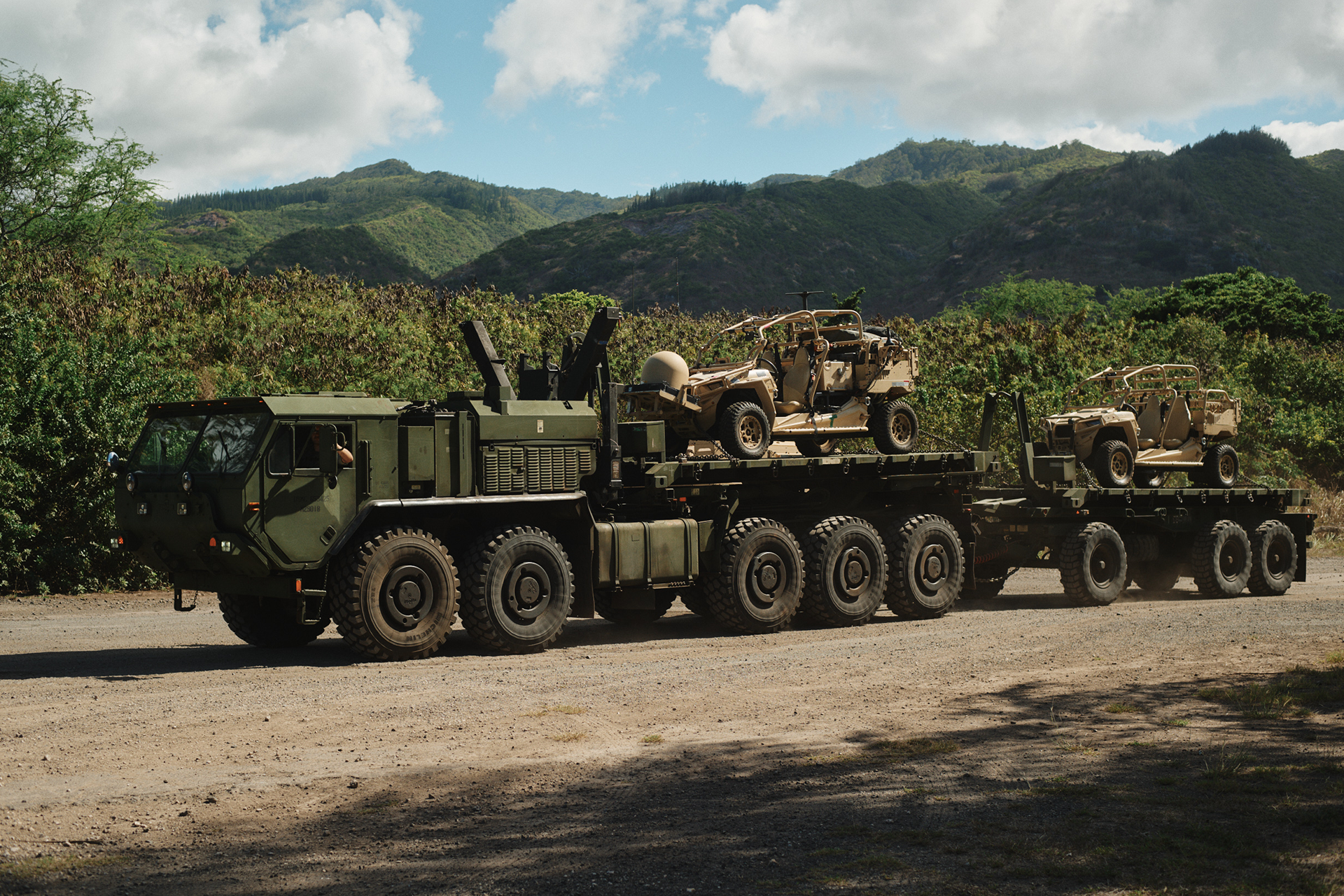
Heavy equipment transport truck carries multiple tactical vehicles on flatbed trailer in Hawaii mountain terrain.

Doing the Heavy Lifting in the Fight

Behind every Marine on the front lines is a powerful logistics force keeping the mission moving. Marine transport vehicles like the Medium Tactical Vehicle Replacement (MTVR) and the Logistics Vehicle System (LVS) are built to haul essential gear, ammunition, fuel, and supplies across any terrain. The LVS can carry up to 45,000 pounds of cargo, ensuring Marines have what they need—when and where they need it. In the fight, mobility and supply are everything—and these vehicles deliver both.

Heavy equipment transport truck carries multiple tactical vehicles on flatbed trailer in Hawaii mountain terrain.

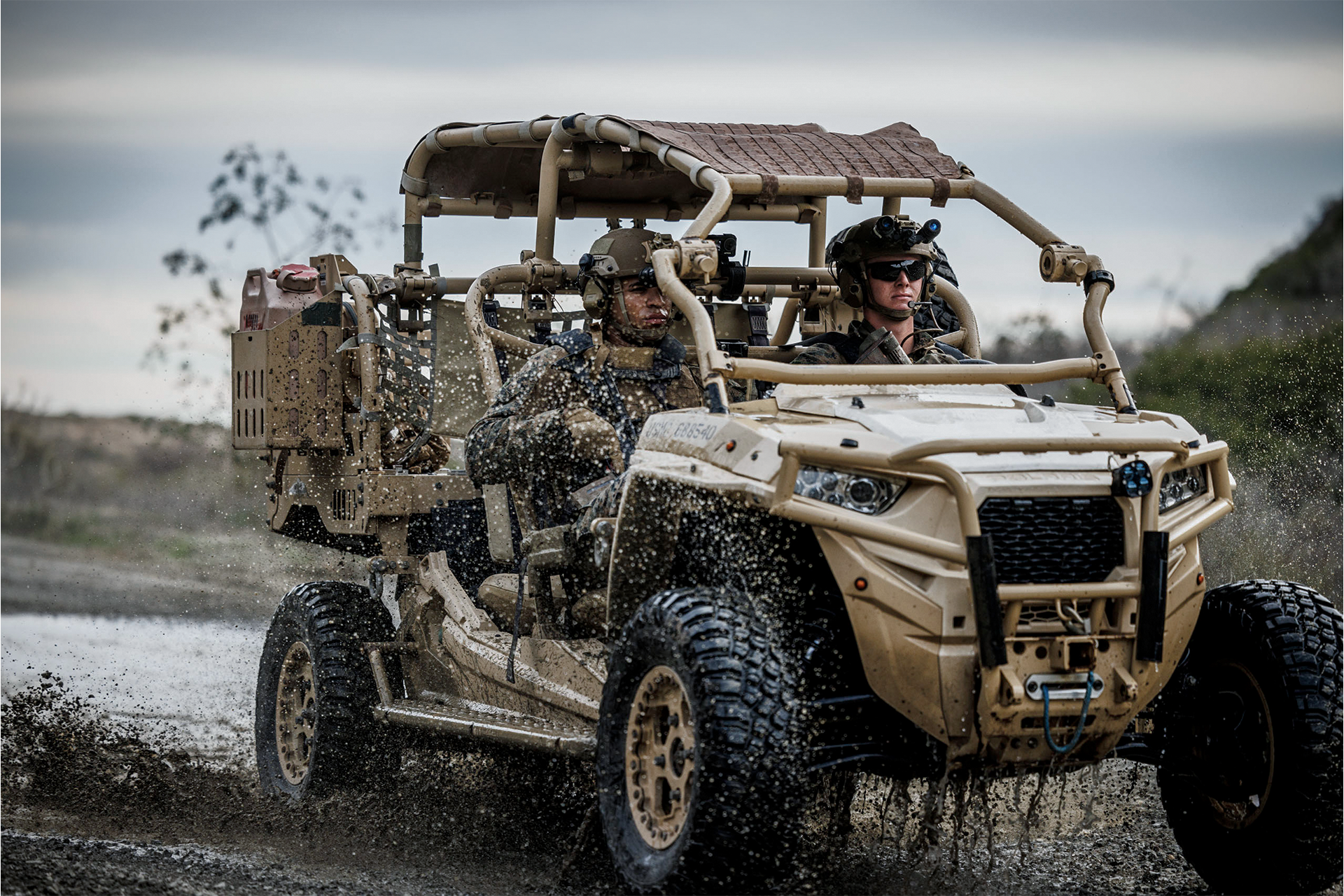
Marines drive MRZR light tactical vehicle through muddy water during off-road training at Camp Pendleton.

Light, Fast, and Mission-Ready

Marine light tactical vehicles are built for speed, agility, and versatility in the toughest environments. The HDT M1030M1, a diesel-powered motorcycle, the Joint Light Tactical Vehicle (JLTV), and the MRZR are the lightest and most mobile in the fleet—capable of transporting Marines, gear, injured personnel, and mounted weapons across rugged terrain. The ultra-light MRZR can even be carried aboard MV-22 Ospreys, allowing it to deploy deep from offshore and reach the fight fast. When the mission demands rapid movement and off-road capability, these vehicles lead the way.

Marines drive MRZR light tactical vehicle through muddy water during off-road training at Camp Pendleton.

Airpower That Supports Every Mission

Marines fly a diverse fleet of aircraft—each designed to support Marines on the ground. From attack helicopters to transport jets, every aircraft delivers unique capabilities that keep Marines connected, protected, and ready to strike.

Watch the video to see these aircraft in action.

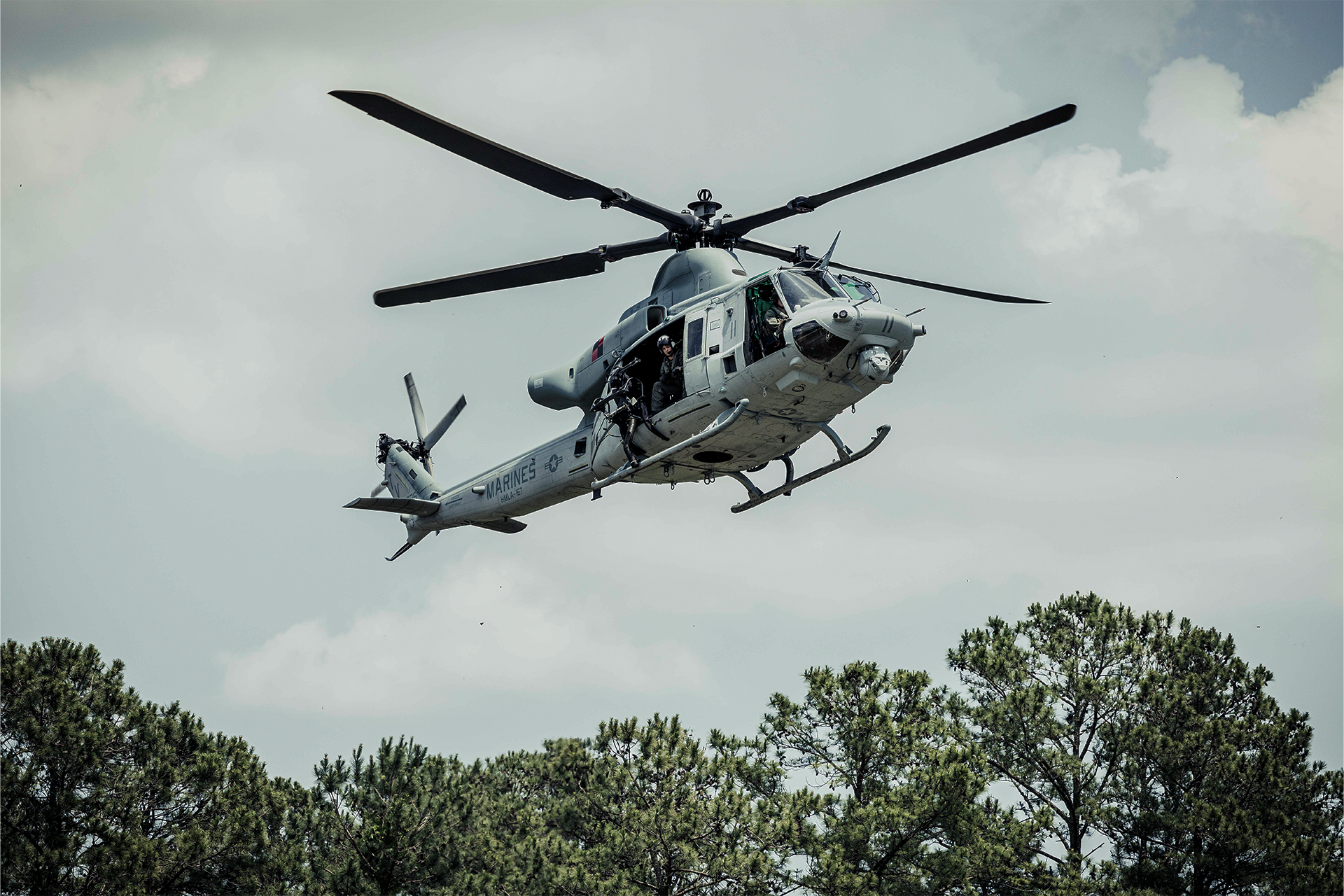
UH-1Y Venom utility helicopter with crew in open doors flies over tree line during training at Camp Lejeune.

Air Support That Moves the Mission

Marine Corps helicopters are built for versatility, speed, and power—supporting missions from every angle. The UH-1Y Venom, or “Huey,” delivers supplies, transports Marines, and provides close-range fire support. The CH-53K King Stallion is the Corps’ heavy lifter—the largest helicopter in the U.S. military—capable of moving everything from troops to a JLTV or LAV. For pure firepower, the AH-1Z Viper, also known as the “Cobra,” is the Marines’ only attack helicopter—small, fast, and armed with rockets, missiles, and guns to strike enemies on land or in the air.


UH-1Y Venom utility helicopter with crew in open doors flies over tree line during training at Camp Lejeune.

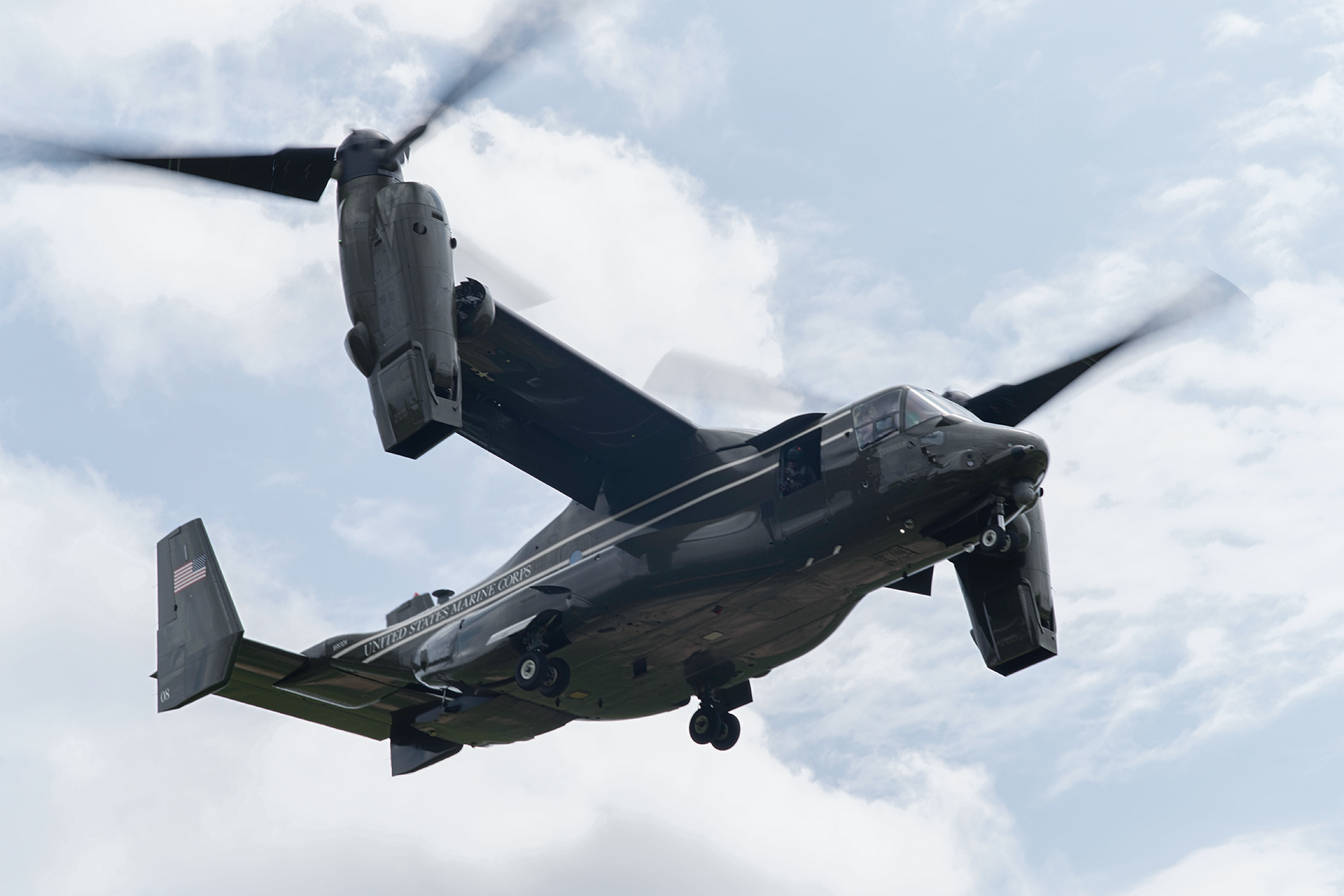
MV-22 Osprey tiltrotor aircraft flies with rotors in vertical position during training operations against cloudy sky.

MV-22 Osprey: Versatility in Flight

The MV-22 Osprey is one of the most unique and capable aircraft in the world. With tiltrotor technology, it combines the vertical takeoff and landing abilities of a helicopter with the range and speed of a turboprop plane. This hybrid design allows the Osprey to move Marines, vehicles, and vital supplies quickly between ship, shore, and deep inland—making it a game-changer for expeditionary missions. Fast, flexible, and built for the fight, the Osprey keeps Marines ready wherever the mission leads.

MV-22 Osprey tiltrotor aircraft flies with rotors in vertical position during training operations against cloudy sky.

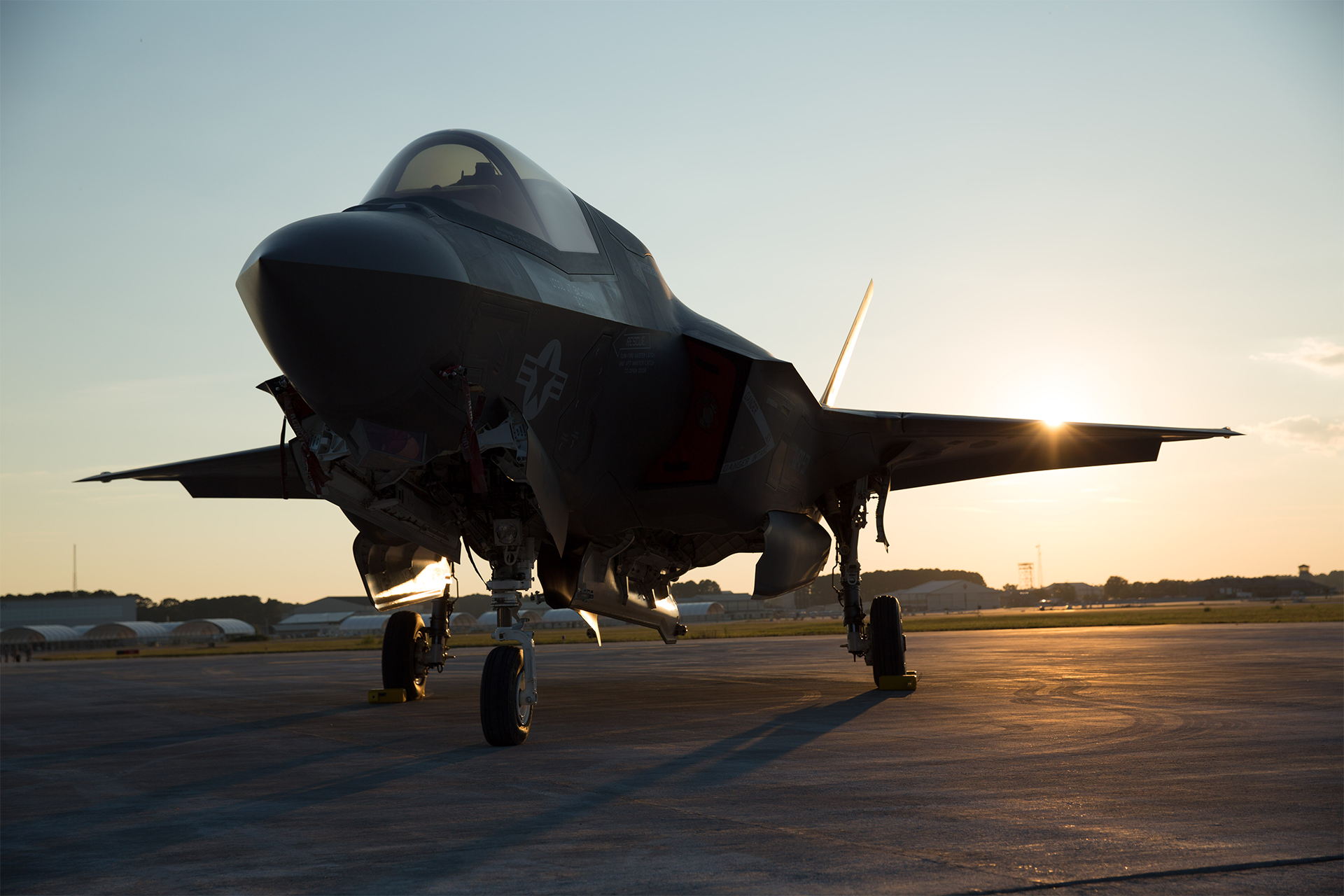
F-35B Lightning II stealth fighter jet on flight line at sunset with open weapons bay doors.

The Future of Marine Air Power

The F-35 is the most advanced fighter aircraft ever flown by the Marine Corps—fast, stealthy, and built for multi-role dominance. Whether striking enemy targets in the air or on the ground, jamming enemy signals through electronic warfare, or gathering critical battlefield intel, the F-35 gives Marines the edge across every domain.

Marines fly two variants: the more numerous F-35B, capable of vertical takeoff and landing from the decks of MEU ships, and the less common F-35C, designed for carrier-based operations on short runways. Replacing legacy aircraft like the AV-8B Harrier and F/A-18 Hornet, the F-35 is redefining Marine aviation—mission by mission.

F-35B Lightning II stealth fighter jet on flight line at sunset with open weapons bay doors.

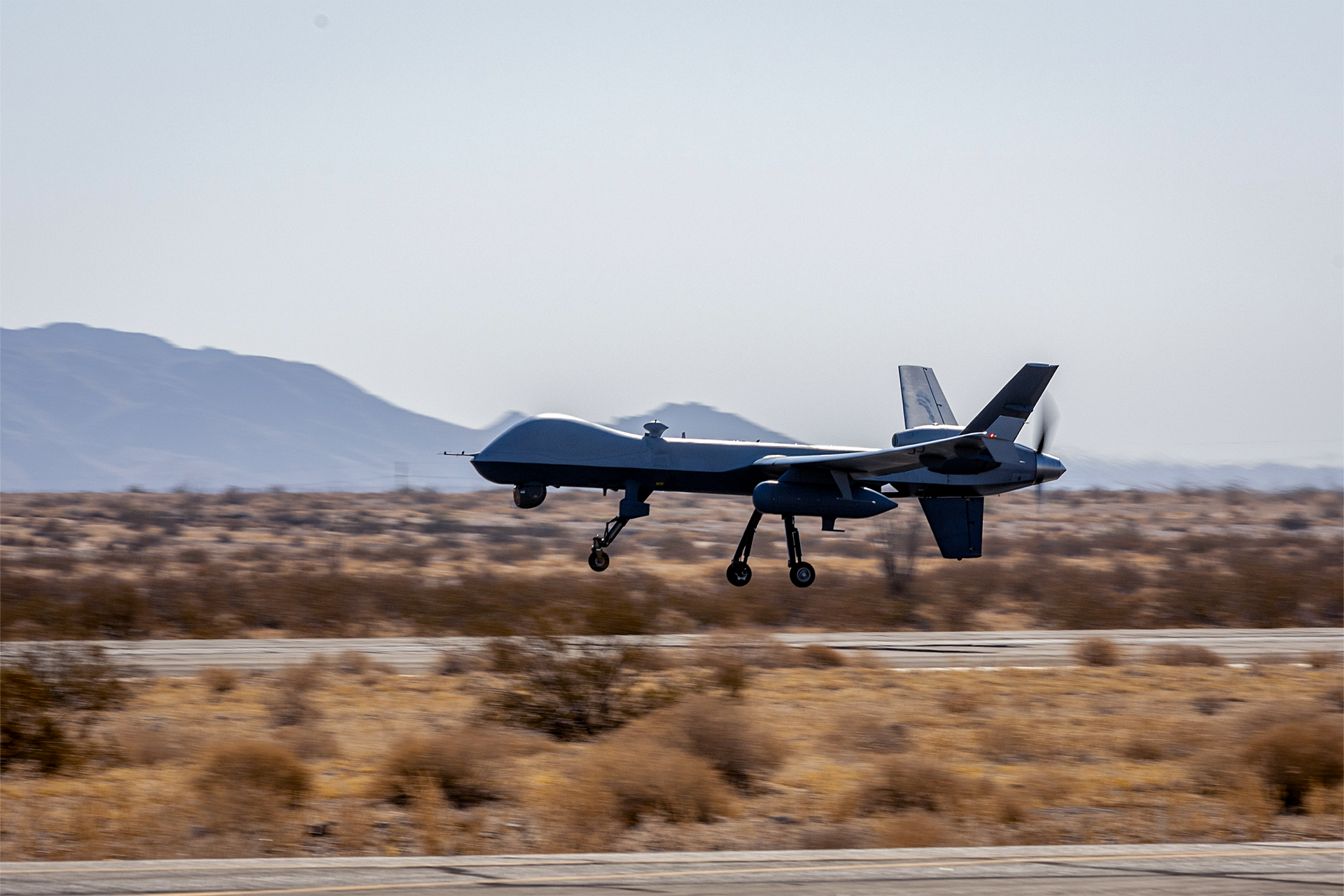
MQ-9 Reaper unmanned aerial vehicle takes off from desert airfield with mountains in background during operations.

Unmanned. Unseen. Always Watching.

The Marine Corps employs a wide range of Unmanned Aerial Vehicles (UAVs) to gather vital intelligence, maintain constant awareness on the battlefield, and assist with offensive and defensive operations. From the tiny Black Hornet Nano—just one inch wide and weighing less than an ounce—to the ship-launched RQ-21 Blackjack, and the powerful MQ-9 Reaper with a 66-foot wingspan and 1,000 nautical mile range, these UAVs act as crucial air support.

MQ-9 Reaper unmanned aerial vehicle takes off from desert airfield with mountains in background during operations.

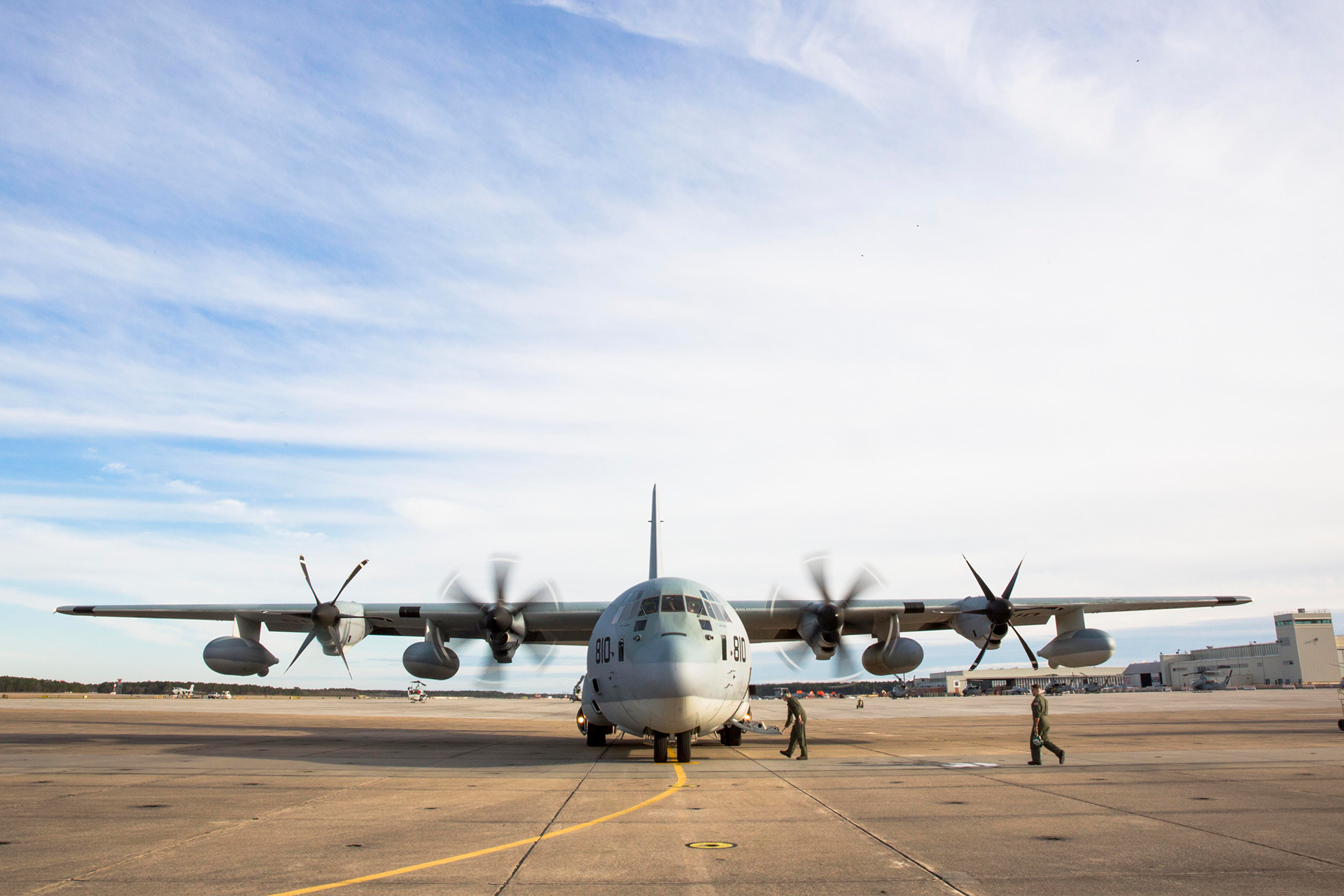
KC-130J Super Hercules cargo aircraft with four turboprop engines on flight line with ground crew performing checks.

Fixed-Wing Force and Firepower

Marine Corps fixed-wing aircraft play a vital role in keeping missions moving. Aircraft like the KC-130J are true multi-role workhorses—capable of transporting Marines, hauling critical cargo, evacuating casualties, and even delivering close air support. Uniquely equipped for aerial refueling, the KC-130J extends the range of both fighter jets and helicopters, keeping Marine airpower in the fight longer. Capable of being armed with a wide array of weapons, it can also support ground troops when firepower is needed most.

When versatility matters, Marine fixed-wing aircraft deliver.

KC-130J Super Hercules cargo aircraft with four turboprop engines on flight line with ground crew performing checks.

Gear That Enhances the Warrior

Gear That Enhances the Warrior

Every Marine is equipped with advanced gear designed to empower them on the battlefield. From body armor and helmets to cutting-edge communication systems and night vision, this gear safeguards Marines’ health, strengthens coordination, and increases combat effectiveness.

FY25 South Korea Content Collection, Joint Training, Pre Flight Ops, Equipment & Gear, Rucksack, Rifle

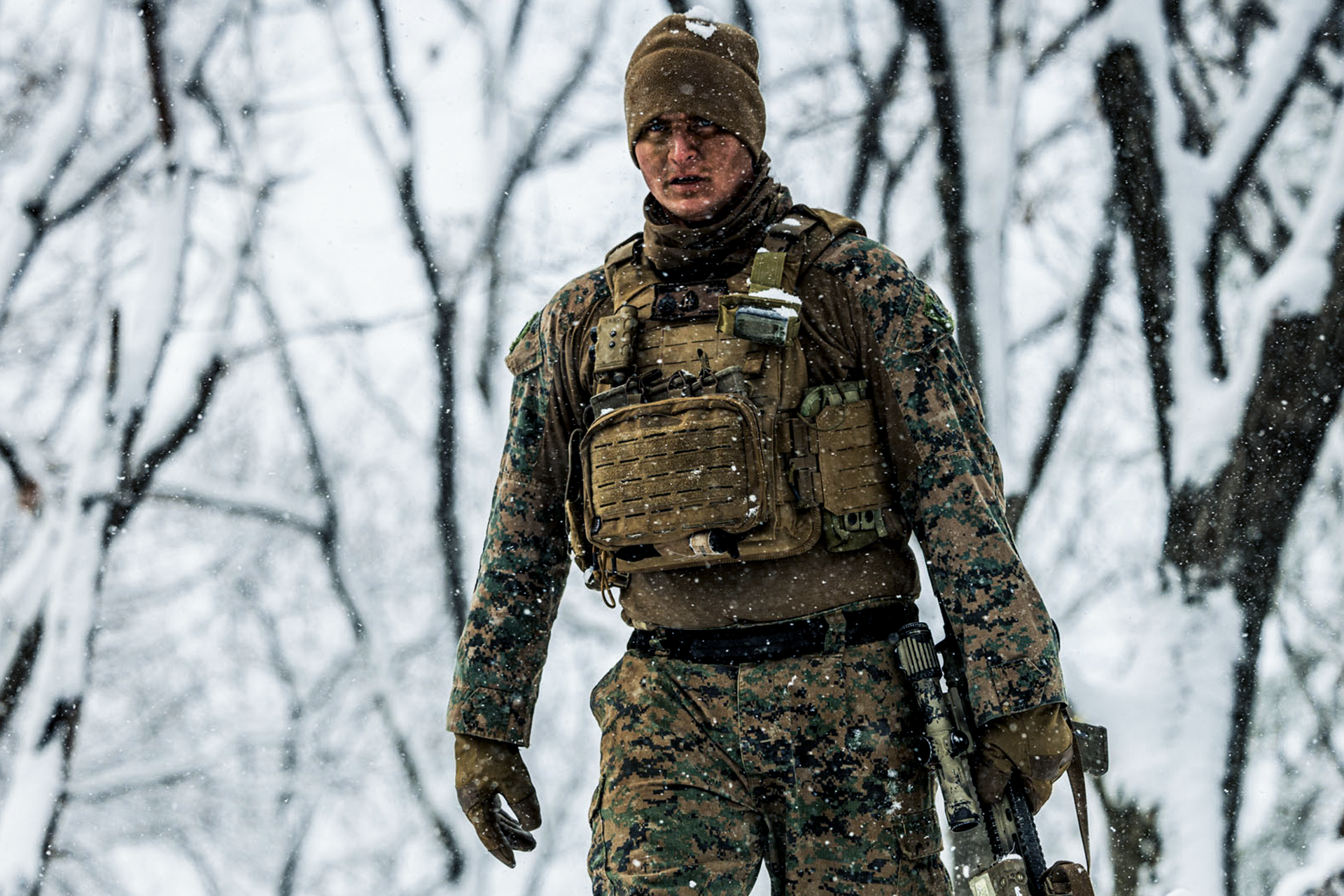
Marine wears tactical vest with pouches and cold weather gear during winter training exercise in South Korea.

Protecting What's Important

Marines are outfitted with gear designed to protect without slowing them down. The Ballistic Hearing Protection (BHP) system guards against damaging noise from aircraft, machinery, gunfire, and explosions. Its dual-purpose design allows Marines to adjust based on the mission—yellow side in for impulse noise protection while still hearing commands, or green side in for constant high-noise environments up to 190 dB.

The Improved Modular Tactical Vest (IMTV) provides ballistic protection against bullets and shrapnel while allowing full range of motion—so Marines can shoulder their rifles, move freely, and stay in the fight. This gear doesn’t just protect—it enhances performance where it counts.

Marine wears tactical vest with pouches and cold weather gear during winter training exercise in South Korea.

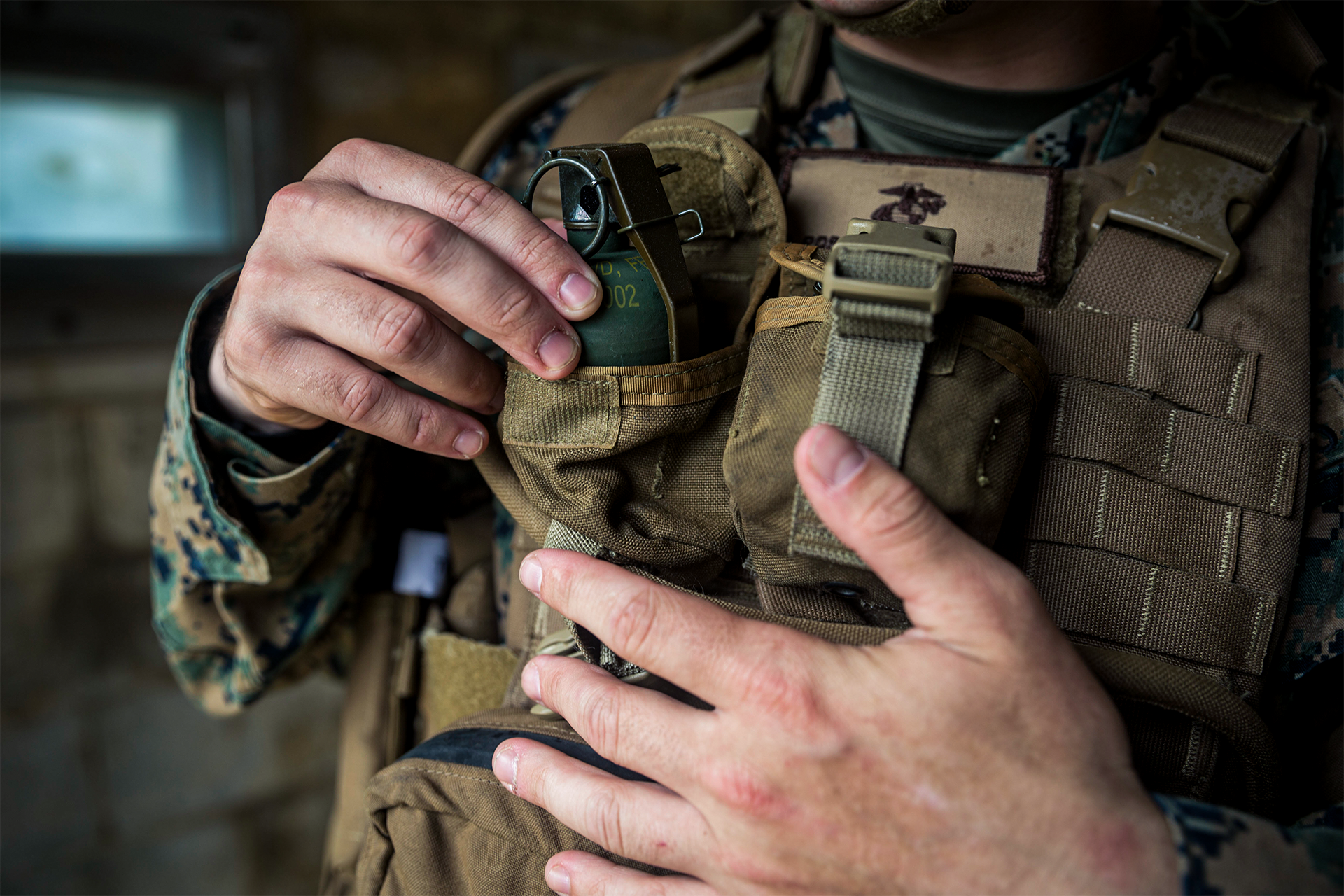
Marine removes training grenade from tactical pouch attached to plate carrier vest during equipment demonstration.

Essential Gear, Always Within Reach

Marine equipment pouches are lightweight, modular storage systems that keep critical gear exactly where it’s needed—accessible, secure, and ready at a moment’s notice. Designed for adaptability and speed, these pouches allow Marines to carry extra ammunition, first aid supplies, tools, and other mission-essential items without slowing them down.

Built for the fight, this gear ensures Marines stay equipped and focused—no matter the mission.

Marine removes training grenade from tactical pouch attached to plate carrier vest during equipment demonstration.

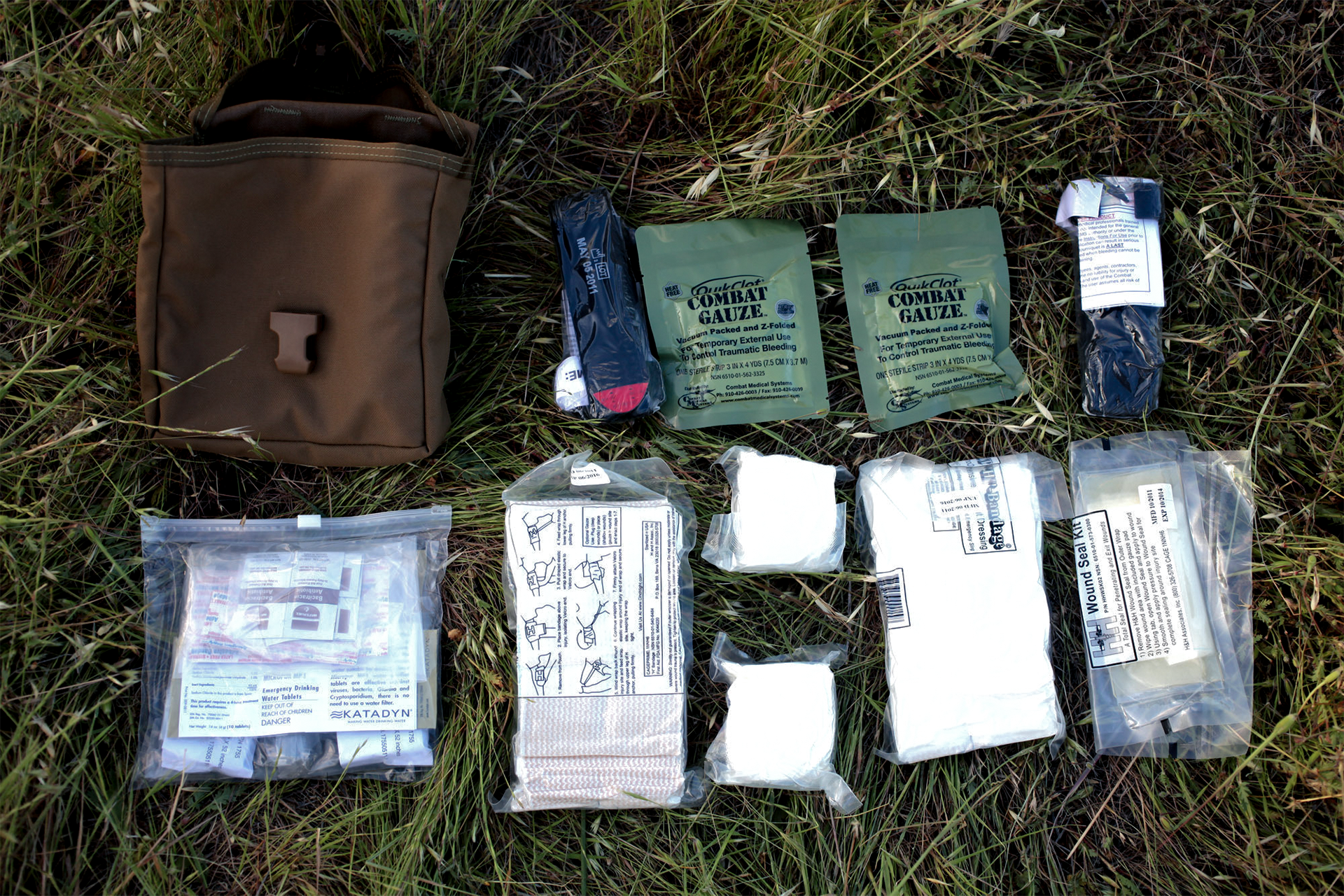
Individual first aid kit contents displayed including combat gauze tourniquets bandages and medical supplies on grass.

Always Ready to Respond

Every Marine carries an Individual First Aid Kit (IFAK)—a compact, mission-critical tool designed to treat injuries quickly and effectively on the battlefield. Packed with essential medical supplies like tourniquets, bandages, and wound dressings, the IFAK gives Marines the ability to provide immediate self-aid or buddy-aid in life-threatening situations.

Individual first aid kit contents displayed including combat gauze tourniquets bandages and medical supplies on grass.

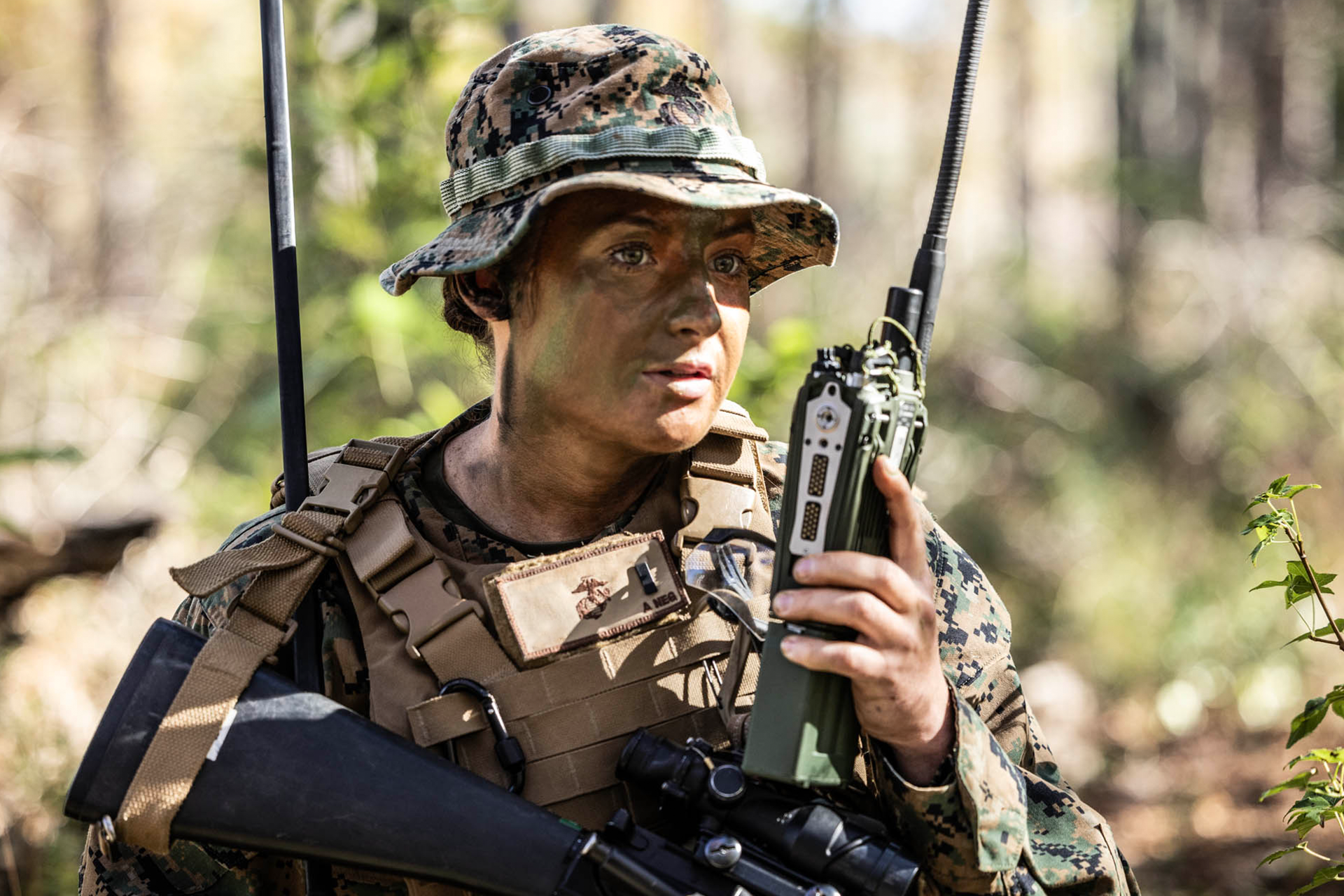
Marine uses tactical radio for communications during field training exercise wearing boonie hat and plate carrier.

Staying Connected to Stay Ahead

The Motorola PRC-153 Integrated Intra-Squad Radio is a vital lifeline for Marines in the field. Lightweight, rugged, and easy to use, this radio keeps squads connected with clear, secure communication in any environment. Whether coordinating movements, calling for support, or sharing critical intel, the PRC-153 ensures every Marine stays informed and ready. Built to perform under pressure, it’s communication you can count on—because every mission depends on staying connected.

Marine uses tactical radio for communications during field training exercise wearing boonie hat and plate carrier.

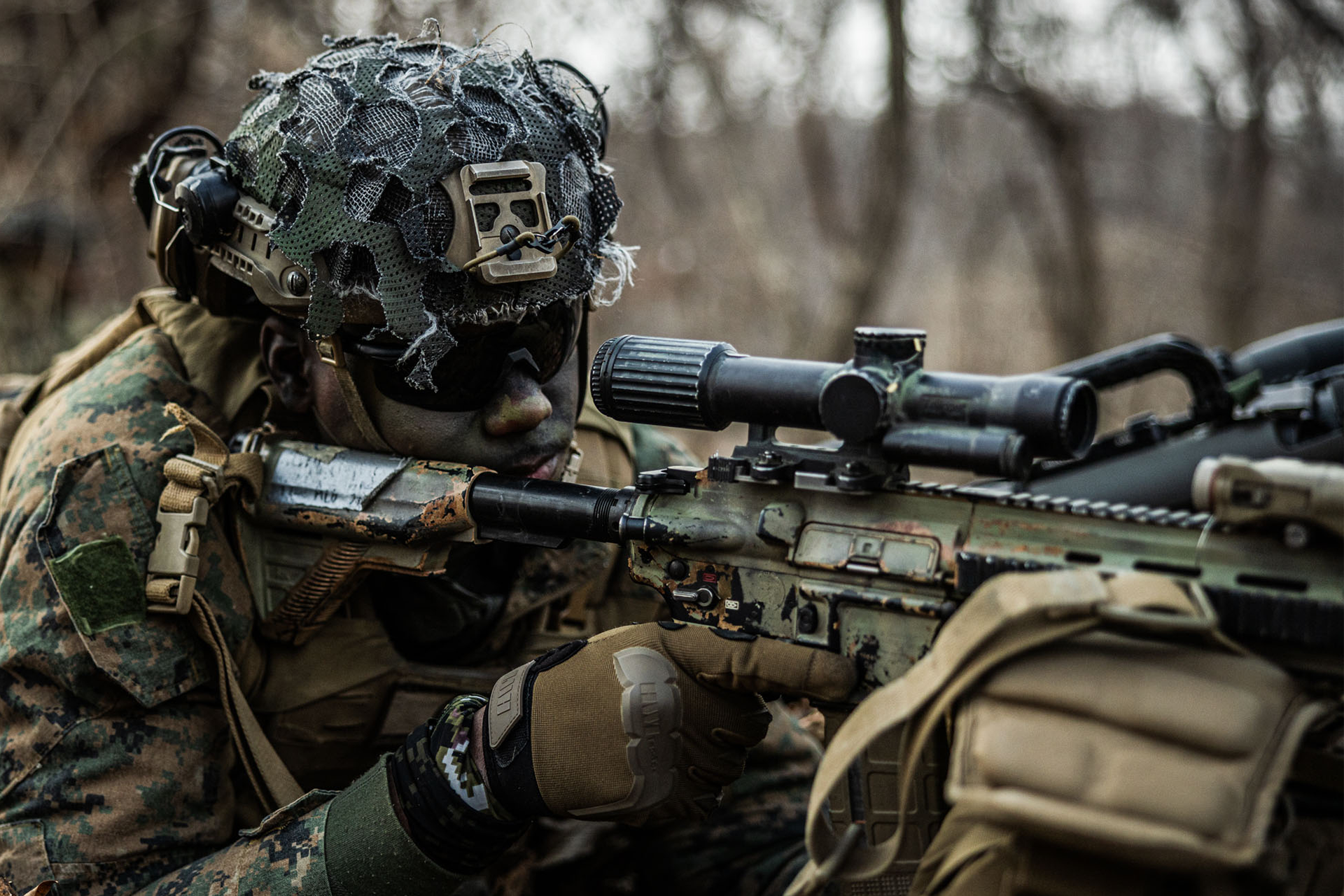
Marine aims rifle with magnified scope and camouflage covering helmet during training in South Korea.

Precision Targeting With Advanced Rifle Sights

Marine rifles and machine guns are equipped with cutting-edge sights to enhance accuracy and speed. Laser sights provide instant target acquisition in close quarters, while the Squad Combat Optic (SCO) offers magnified views for longer-range precision. Together, these systems increase lethality by improving aim, even in low light or challenging environments—giving every Marine the tools to strike fast and true.

Marine aims rifle with magnified scope and camouflage covering helmet during training in South Korea.
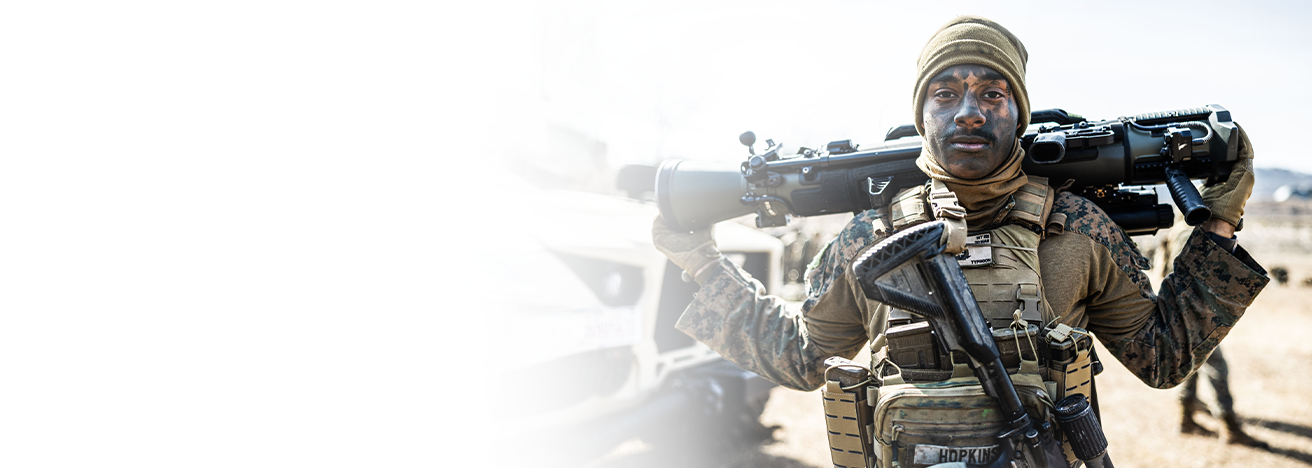
Marine carries M3E1 Multi-role Anti-Armor Anti-Personnel Weapon System on shoulders during pre-flight operations.

Ready to Gear Up? See a Recruiter.

You’ve seen the weapons and gear Marines use, now it’s time to explore which role fits you best. Talk to a recruiter to get personalized guidance and start your journey.

Contact a Recruiter