Marine in dress blue uniform exemplifying the high standards of Marine Corps enlistment requirements.

Take the First Step

Enlistment Requirements

Before you can earn the title Marine, you have to meet the standards

Not Everyone Makes the Cut

To even consider an endeavor of this magnitude is admirable, but just as the Marine Corps may not be right for everyone—not everyone is right for the Corps.

Every Marine undergoes rigorous training that requires a commitment to physical, intellectual, and emotional fitness. Before you qualify to enlist, you have to show you have the basic makings of a potential Marine.

General Enlistment Requirements

Before you try for the title Marine, you must meet the Corps’ high standards for age, education, fitness, and character.

To enlist as a Marine, you must:

  • Have a high school diploma or GED
  • Be a U.S. citizen or legal resident
  • Be between the age of 17 and 28
  • Pass a criminal background check and have no felony convictions

Because of the increased responsibility, becoming a Marine Officer requires meeting higher qualifications, you must:

  • Have a four-year college degree at the time of commissioning
  • Be a U.S. citizen
  • Be at least 20 years old (discuss eligibility with an Officer Selection Officer)
  • Have strong moral character and leadership potential
  • Pass a criminal background check with no felony convictions
  • Meet physical and medical fitness standards

All new recruits must:

  • Pass The Initial Strength Test, or IST, to demonstrate their physical fitness. The IST consists of pull-ups or push-ups, plank pose, and a 1.5-mile timed run.
INITIAL STRENGTH TEST (IST)

INITIAL STRENGTH TEST (IST)

To even begin recruit training, aspiring Marines must pass the IST. Passing the IST means you can handle the physical requirements expected of every Marine. It is recommended that recruits report to training with scores well above the minimum standards. The IST consists of the following tests:

FOR ALL APPLICANTS

PULL-UPS/PUSH-UPS

  • Male: 3 pull-ups or 34 push-ups (2:00 time limit)
  • Female: 1 pull-up or 15 push-ups (2:00 time limit)

RUN

  • Male: 1.5 mile run in 13:30
  • Female: 1.5 mile run in 15:00

PLANK  

  • 40 second plank
Marine recruit performing pull-ups on bar during Initial Strength Test fitness assessment requirement.
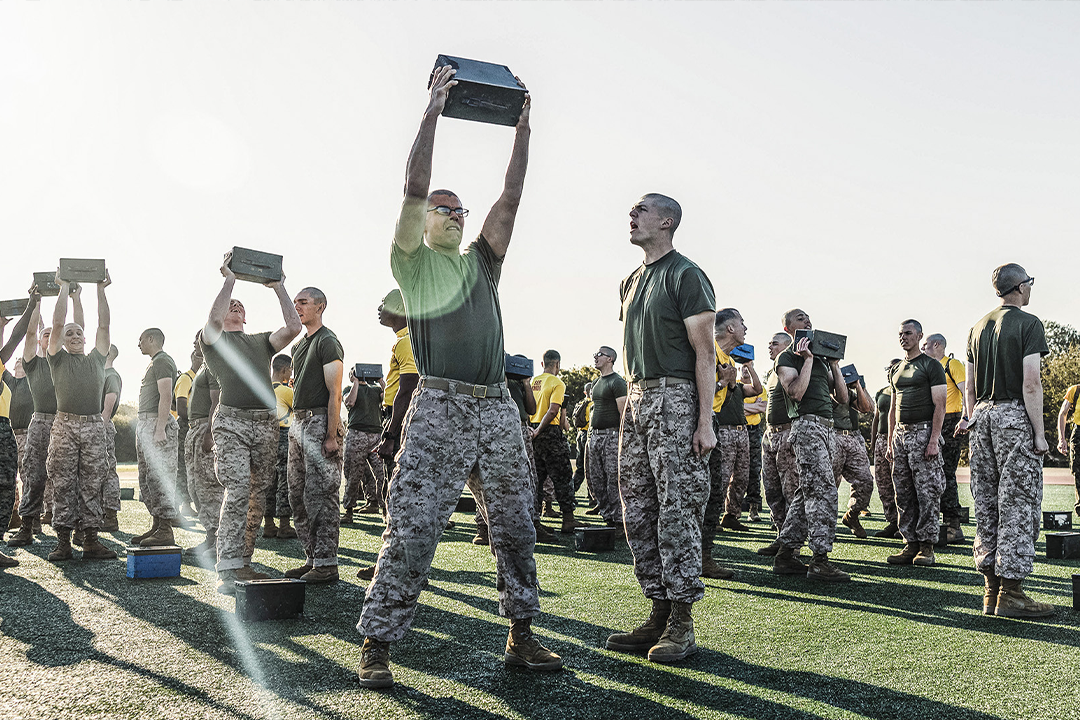
Marine recruits performing overhead ammo can lifts during Combat Fitness Test physical fitness assessment.

Tested for the Fight

Combat Fitness Test (CFT)

Prove your readiness.

The CFT measures the strength, speed, and endurance. Conducted in full utility uniform, it consists of an 880-yard sprint, repeatedly lifting a 30-pound ammo can overhead, and a 300-yard course featuring combat crawls, agility runs, casualty drags, fireman’s carries, and grenade throws.

Marine recruits performing overhead ammo can lifts during Combat Fitness Test physical fitness assessment.
Physical Fitness Test (PFT)

Physical Fitness Test (PFT)

Strength is Just the Beginning

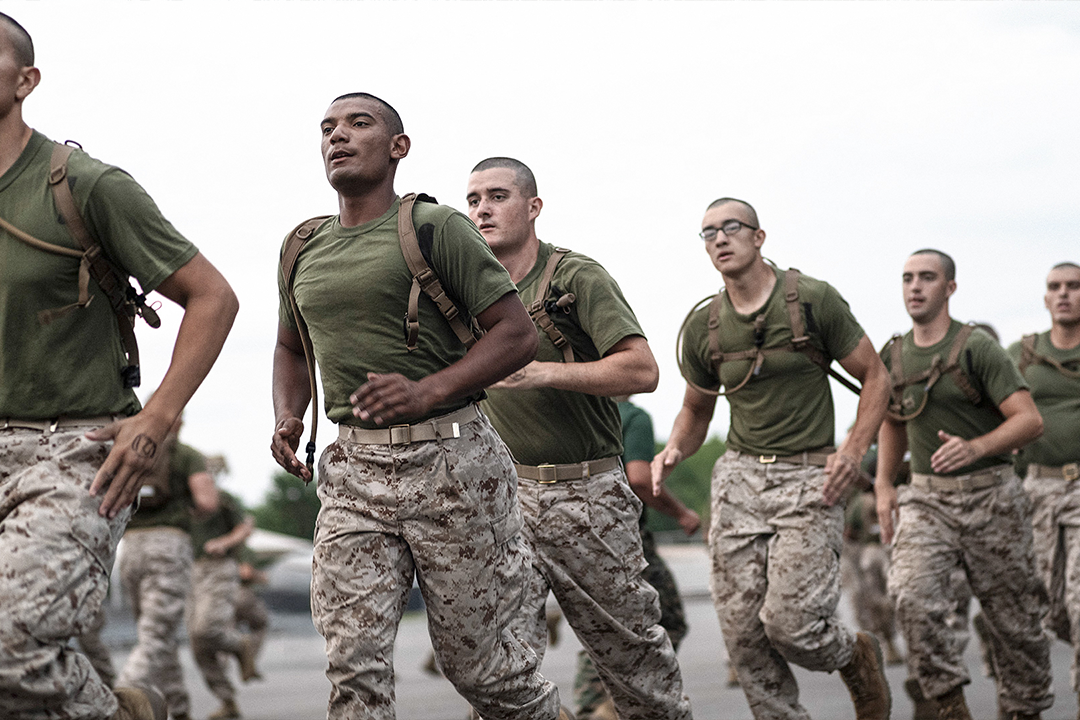
The Physical Fitness Test (PFT) is a core requirement for all Marines, designed to assess overall physical readiness. It’s not just about passing—it’s about proving you're prepared to meet the demands of the Marine Corps and can handle the physical requirements expected.

Every Marine must complete the PFT annually. It includes three events that challenge upper body strength, core stability, and cardiovascular endurance:

  • Pull-Ups or Push-Ups: Test upper body strength and muscular endurance. Maximum effort is expected, and performance standards vary by age and gender.
  • Plank Pose: Replaces crunches to better measure core strength and stability under strain.
  • Three-Mile Run: A timed run that pushes your stamina, speed, and mental toughness.

Your score on the PFT directly impacts career progression, promotion eligibility, and leadership opportunities. For Marines, fitness is more than a physical requirement—it’s a reflection of discipline, accountability, and combat readiness.

Whether you're training to enlist or preparing for officer selection, the PFT is your first step in proving you have what it takes.

Group of Marine recruits in desert camouflage running in formation during Physical Fitness Test training.

Armed Services Vocational Aptitude Battery

Prove you have the mind to match the mission through the Armed Services Vocational Aptitude Battery (ASVAB)

The ASVAB is the first test of your potential to become a Marine. This multiple-choice exam evaluates your abilities across subjects like arithmetic, electronics, and mechanical comprehension to determine how you think, learn, and solve problems under pressure.

To meet these requirements and qualify, aspiring Marines must achieve a minimum ASVAB score of 31 or higher—or 50+ if holding a GED or nontraditional diploma. The ASVAB isn’t just a test of knowledge; it measures how well you’re equipped to adapt and overcome the evolving challenges of the modern battlefield.

Your score doesn’t just determine eligibility—it helps align you with the a future role and eventual Military Occupational Specialties (MOS) that best fit your strengths.

Female Marine recruit performs physical training during enlistment preparation with other recruits in background.
A Culture of Continual Fitness

Staying Strong

A Culture of Continual Fitness

More than just meeting a requirement


Every Marine must maintain every type of fitness regardless of age, rank, or MOS. The Delayed Entry Program (DEP) allows future Marines to train together with Recruiters to maintain their eligibility and prepare for recruit training.

The Delayed Entry Program