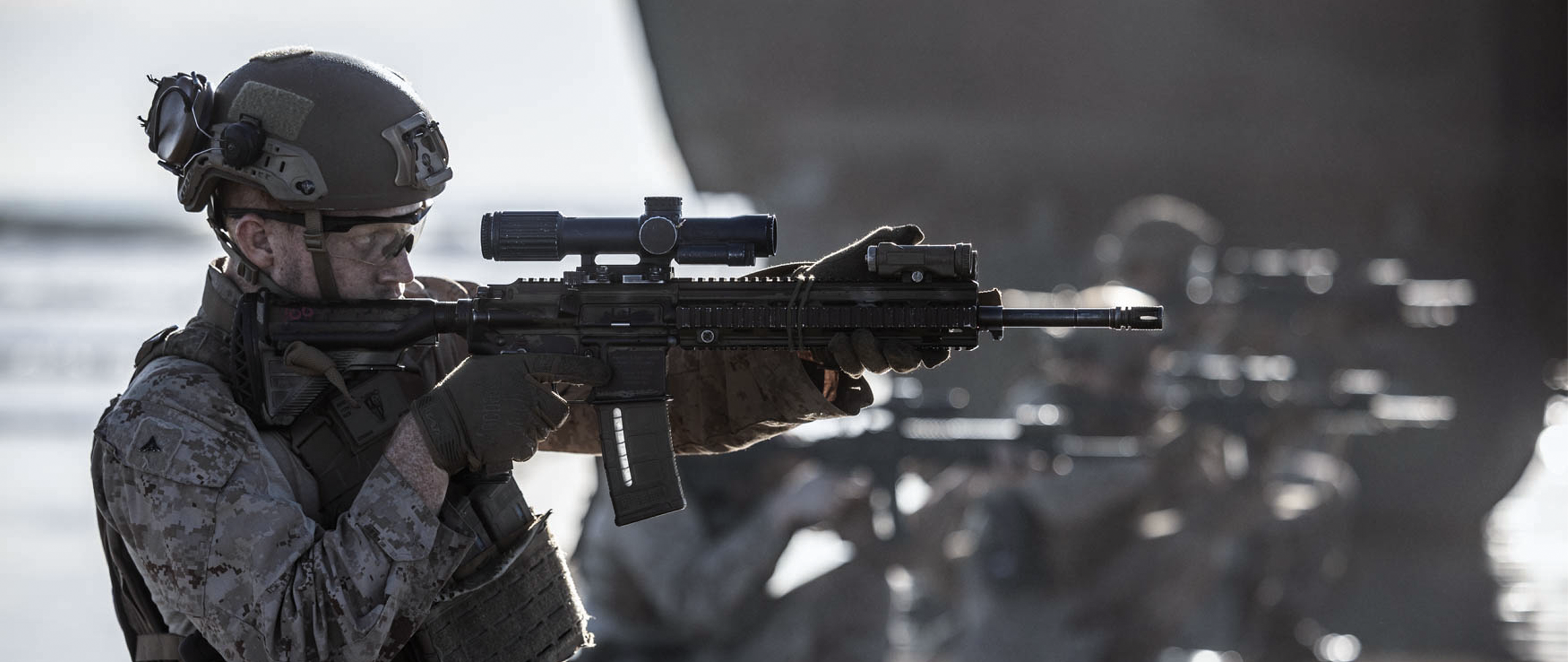
A Marine, in profile, looks down the scope of his rifle. He is on a beach with other Marines. They just got off an amphibious vehicle.

What is the Foundation of Every Marine?

A Willingness to Fight

Learn why the warrior ethos lies at the heart of every Marine

Fighting skills developed early… and under pressure

During Recruit Training and the subsequent School of Infantry (SOI), every Marine is trained in core combat skills: marksmanship, moving under fire, applying basic tactics, and maintaining situational awareness in uncertain environments.

These skills are reinforced through demanding scenarios that test both physical endurance and mental clarity. Fatigue, stress, and complexity are not obstacles—they are part of the training.

Because Marines don’t get to choose the conditions under which they fight, every Marine needs to be prepared to succeed in any clime and place.

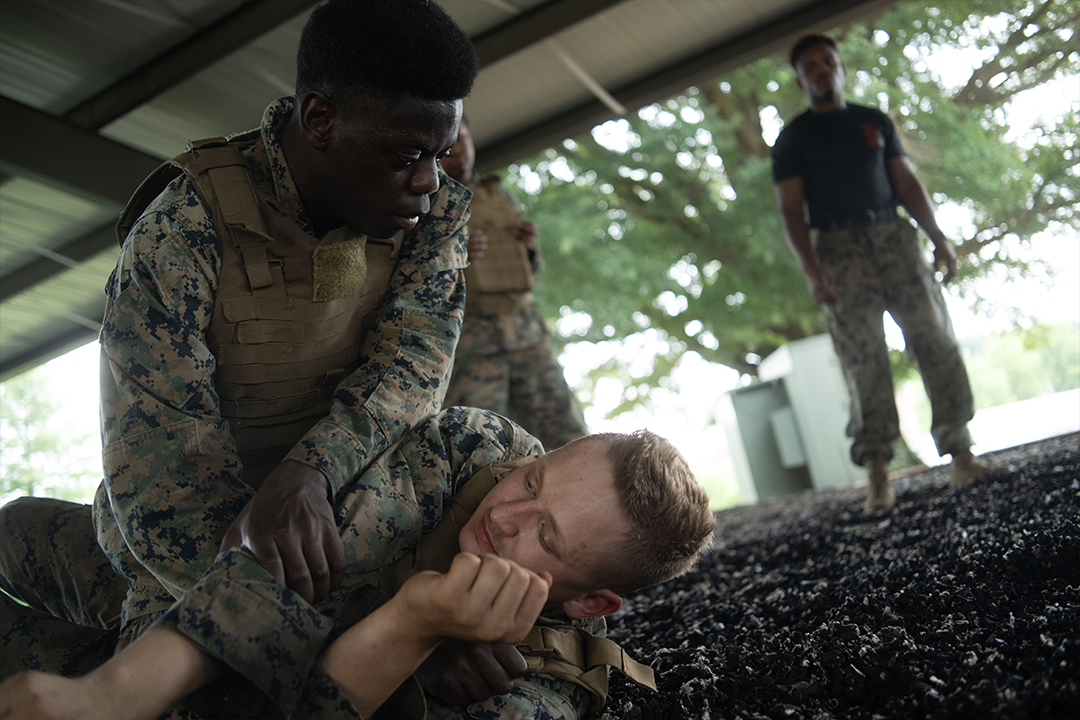
Two Marine recruits wrestle on the ground. One pins the other. A drill instructor oversees the training.

United by the Marine standard

This approach reflects a core truth: combat readiness and the warrior ethos do not belong to a particular specialty. It is an obligation and a mindset that exist across the Marine Corps.

What sets Marines apart is not just what they do, but what is expected of all of them. Every Marine must meet the same baseline of training. And every Marine is trained to run toward the sounds of chaos. That shared standard and attitude builds a force where trust is not assumed—it is continually earned and proven.

Training instills more than skill. Discipline, resilience, accountability—these become more than abstract values. They become daily expectations, because they are a crucial part of what it takes to defeat America's enemies on the battlefield. Recruits learn quickly that standards are not negotiable, and that every action affects the unit. In that environment, confidence grows—not from comfort, but from knowing those alongside you are also trained to the Marine Corps standard.

The result is a culture. Marines depend on each other because they know what it took to earn the title—and what it takes to keep it.

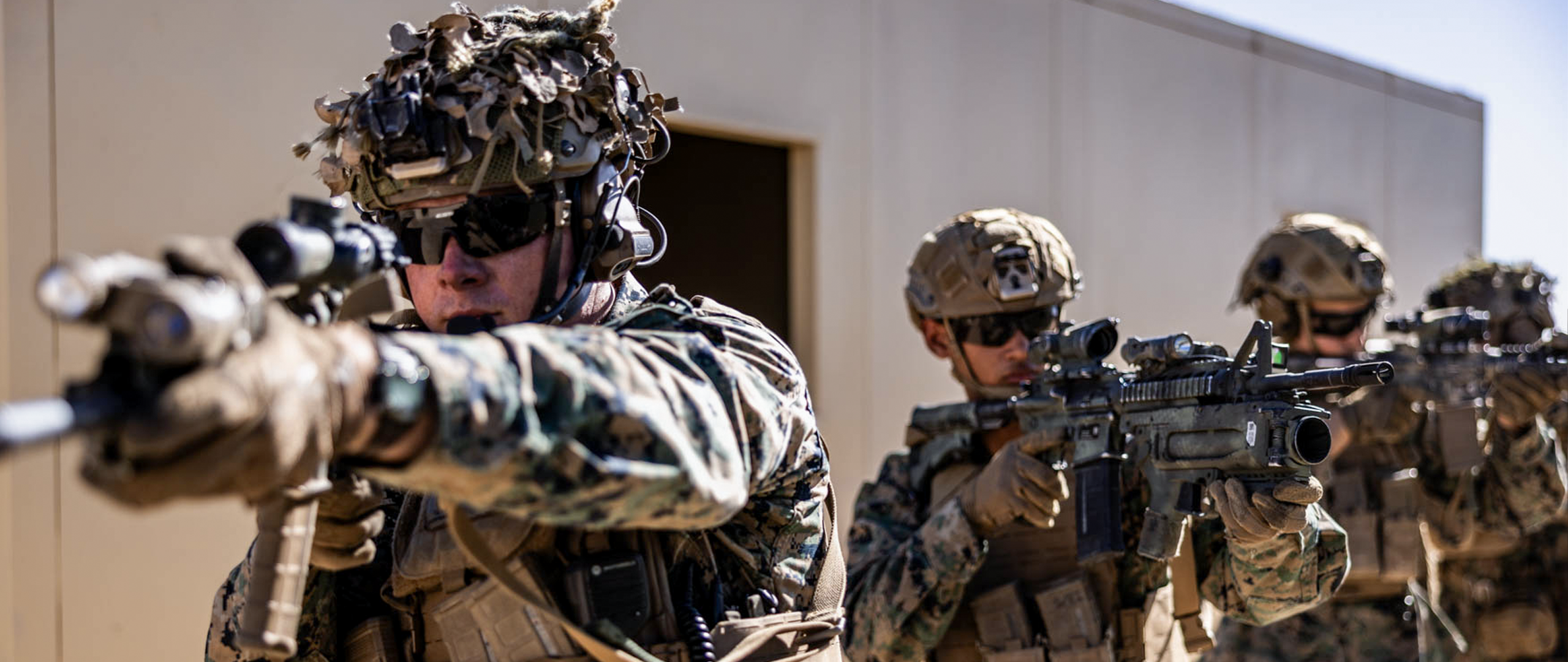
Marines complete a training in a mock combat town in the desert. They look down the scopes of their weapons as they move amongst buildings.

The foundation of every Marine

After Recruit Training and follow-on instruction, Marines move into specialized roles where they develop advanced skills. But those skills are always built on the same foundation: the ability to fight and win.

An aviation technician may maintain critical aircraft systems. A communications Marine may enable the flow of information across the battlefield. But both carry the same mindset and the same basic responsibility as every other Marine. Because if the situation demands it, Marines must be ready to step forward and engage on the battlefield.

Not everyone can carry that burden. But every Marine does.

Ready to see what it means to fight—and win?

The training and mindset forged in the United States Marine Corps exist for one purpose: to confront and defeat our nation’s adversaries. This is where willingness meets action—where Marines are called to step forward, engage, and prevail when it matters most.

Learn About the Mission