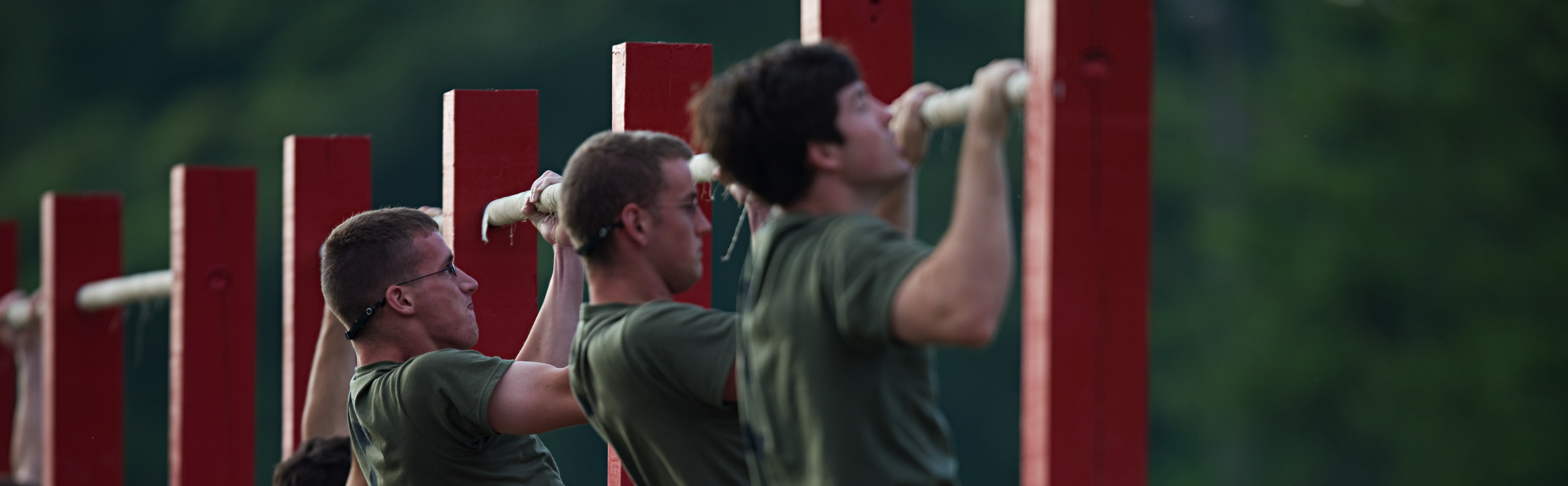
Male Marines complete pull-ups on pull-up bars during the physical fitness test. Other Marines watch them complete the assessment.
HERO_MOBILE_PTWarmup_QUANTICO2008_530__original.jpg HERO_MOBILE_PTWarmup_QUANTICO2008_530__original.jpg
Male Marines complete pull-ups on pull-up bars during the physical fitness test. Other Marines watch them complete the assessment.

Why Pull-Ups Matter for Marines

Climbing, lifting, and controlling your body under load require pulling strength.

Meeting the pull-up standards in the IST and PFT ensures you have it.

If you are considering earning the title Marine, understand this: the physical standards are not symbolic. They are practical. Every event in the Initial Strength Test (IST) and the Marine Corps Physical Fitness Test (PFT) exists for a reason. Pull-ups are no exception.

The pull-up portion of the IST and PFT measures upper-body muscular strength and endurance using your full body weight as resistance. It answers a direct question: Can you repeatedly move and control your own body weight using your upper body?

Marines climb obstacles. They hoist equipment. They pull themselves over barriers. They stabilize loads. They operate in environments where strength is applied under stress, not in controlled gym conditions. That’s why they need strong muscles in the back, shoulders, arms, and grip.

When done correctly, a pull-up cannot be assisted by equipment. It cannot rely on momentum. Each pull-up starts at a dead hang, arms shoulder width apart; fingers gripped over the bar. The actual pull-up requires bringing your chin over the bar and executing a controlled descent back to dead hang

The IST confirms you meet the minimum to begin recruit training safely. The PFT raises that standard once you earn the title. Performance is measured by correct repetitions—not intention.

Why aim for pull-ups if push-ups are an option?

The Marine Corps allows recruits to choose between pull-ups and push-ups to provide an entry-level path for developing strength. Push-ups measure muscular endurance in the chest, shoulders, and triceps. They are valid.

But pull-ups measure total upper-body pulling strength. They are more closely aligned with real Marine tasks. That's one reason why, on the PFT, push ups cannot score a maximum amount of points for the event. That reflects the value put on pull-ups.

If you are struggling to meet the minimum requirements, push-ups may get you started. But your goal should be to exceed the standard and compete at a higher level, and that means developing strict pull-ups. The goal is not to choose the easier event. The goal is to build complete upper-body capability.

The physical and mental standard

Successful pull-up performance requires grip strength, back and arm strength, and body control. If your hands fail, your repetitions stop. If you swing or kip, your repetitions do not count. Form is enforced.

But strength alone is not enough.

As repetitions increase, fatigue builds. Your pace slows. This is where discipline matters. Mental strength during pull-ups means staying focused on one correct repetition at a time. It means resetting at full extension without losing composure. It means continuing to pull when the movement becomes harder.

Mental fitness does not replace strength. It allows you to apply it under pressure.

Five practical tips to meet and exceed the standard

1. Train strict, full-range repetitions only

Partial reps in training become failed reps on test day.

2. Build volume gradually

Increase total weekly repetitions in a structured way. Avoid random max-effort attempts.

3. Practice dead-hang starts every time

Full extension should be automatic.

4. Control your breathing and tempo

Exhale as you pull. Stay deliberate, especially early in the set.

5. Maintain discipline as fatigue sets in

Do not sacrifice form for speed. Perform one correct repetition at a time.

Pull-ups in the Marine Corps fitness test measure strength, control, and discipline under fatigue. The standard is fixed. If you intend to earn the title Marine, train to meet—and exceed—it.

Hold the line

The plank exercise during the IST and PFT

Learn some tips for succeeding at other aspects of the IST and PST, like the plank exercise, in the final part of this four part series.

Read Here