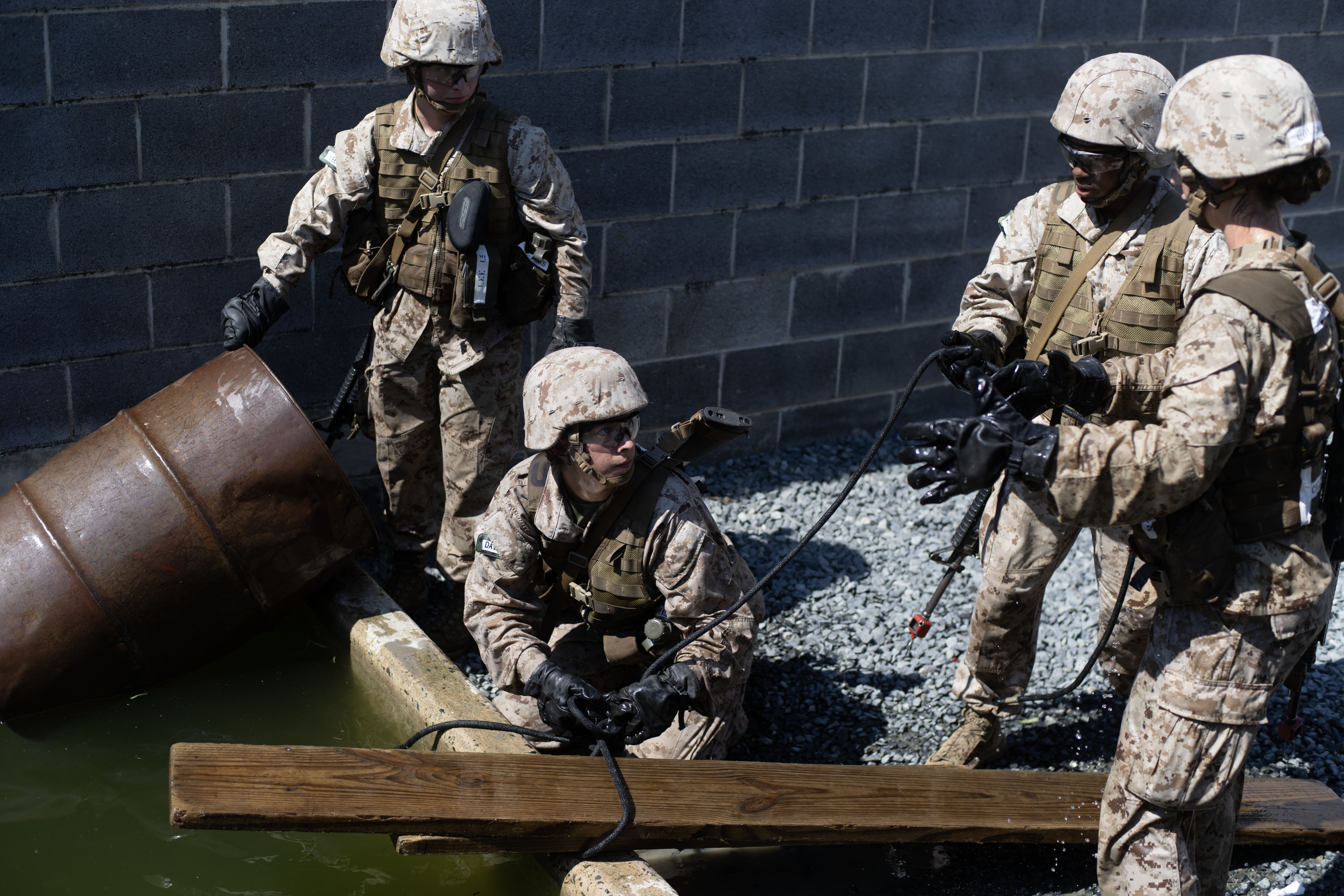
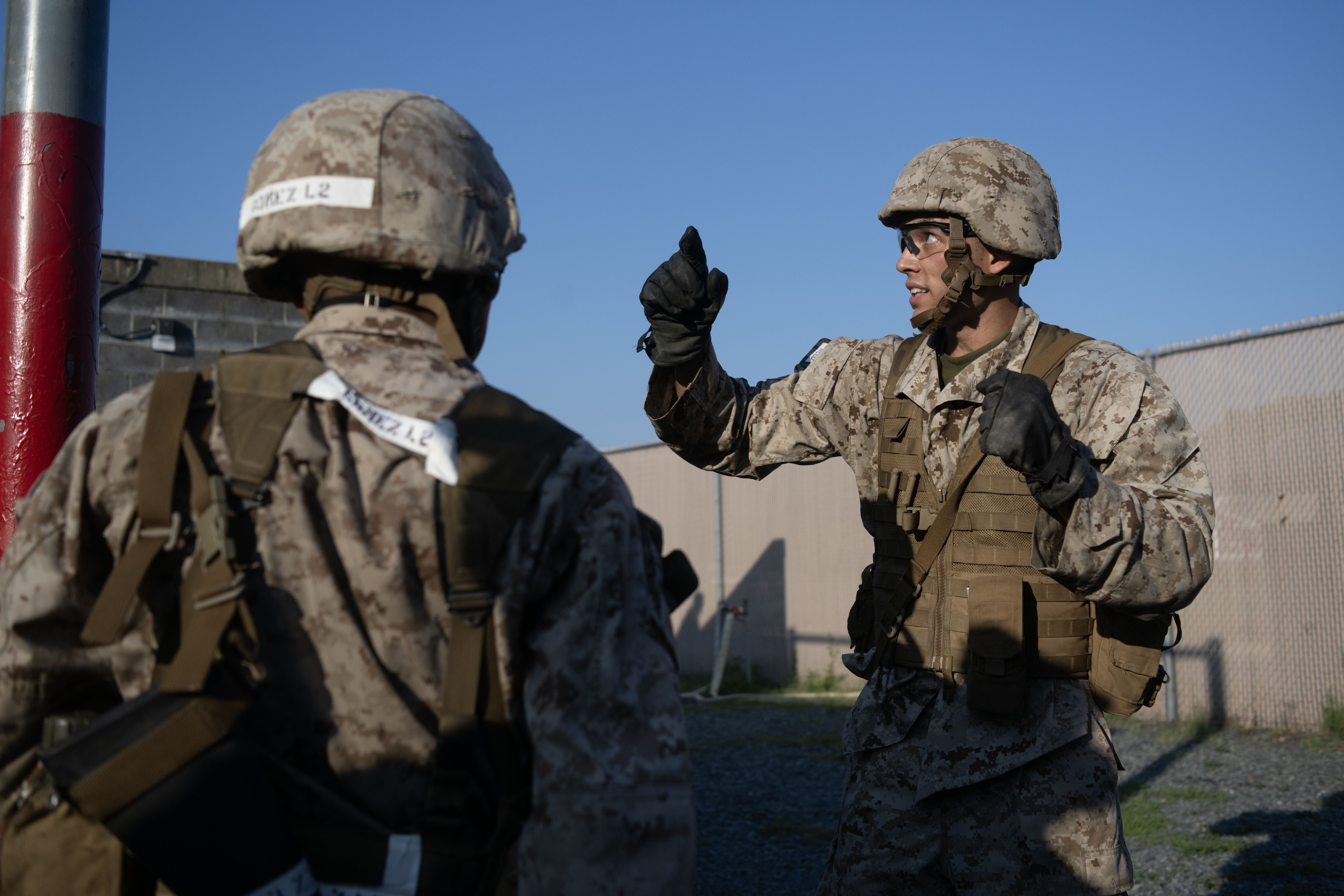
The LRC is part of a larger training philosophy. Marines are not just thrown into chaos and expected to figure it out. They're given a structured approach to decision-making that works precisely because it's simple and repeatable. It's called the OODA Loop, a continuous, four-step decision-making framework: Observe, Orient, Decide, and Act.
This framework doesn't eliminate uncertainty. It’s not meant to. Instead, it gives every Marine a consistent mental process to fall back on when instinct alone isn't enough. They start with an understanding of their commander's intent and then apply their skills and training to achieving success.
You can watch this framework play out in real time in various types of Marine training. Typically, a group will be given a task or obstacle. A team leader scans the obstacle, calls out what resources are available, weighs the options aloud, commits to a course of action, and pivots when the situation demands it. The framework creates order without requiring perfect information. And because solving problems, especially on the battlefield, demands flexibility, any Marine must be able to make good decisions at any time.
Consistent training and a shared understanding of the commander’s intent is what makes Marines effective in dynamic environments. Every Marine brings unique experiences, perspectives, and creativity to a situation, often leading to different but equally effective approaches to a problem. By understanding the commander’s intent, Marines can make sound decisions and take the type of decisive actions that lead to mission success even when time is limited and direct guidance is unavailable.